
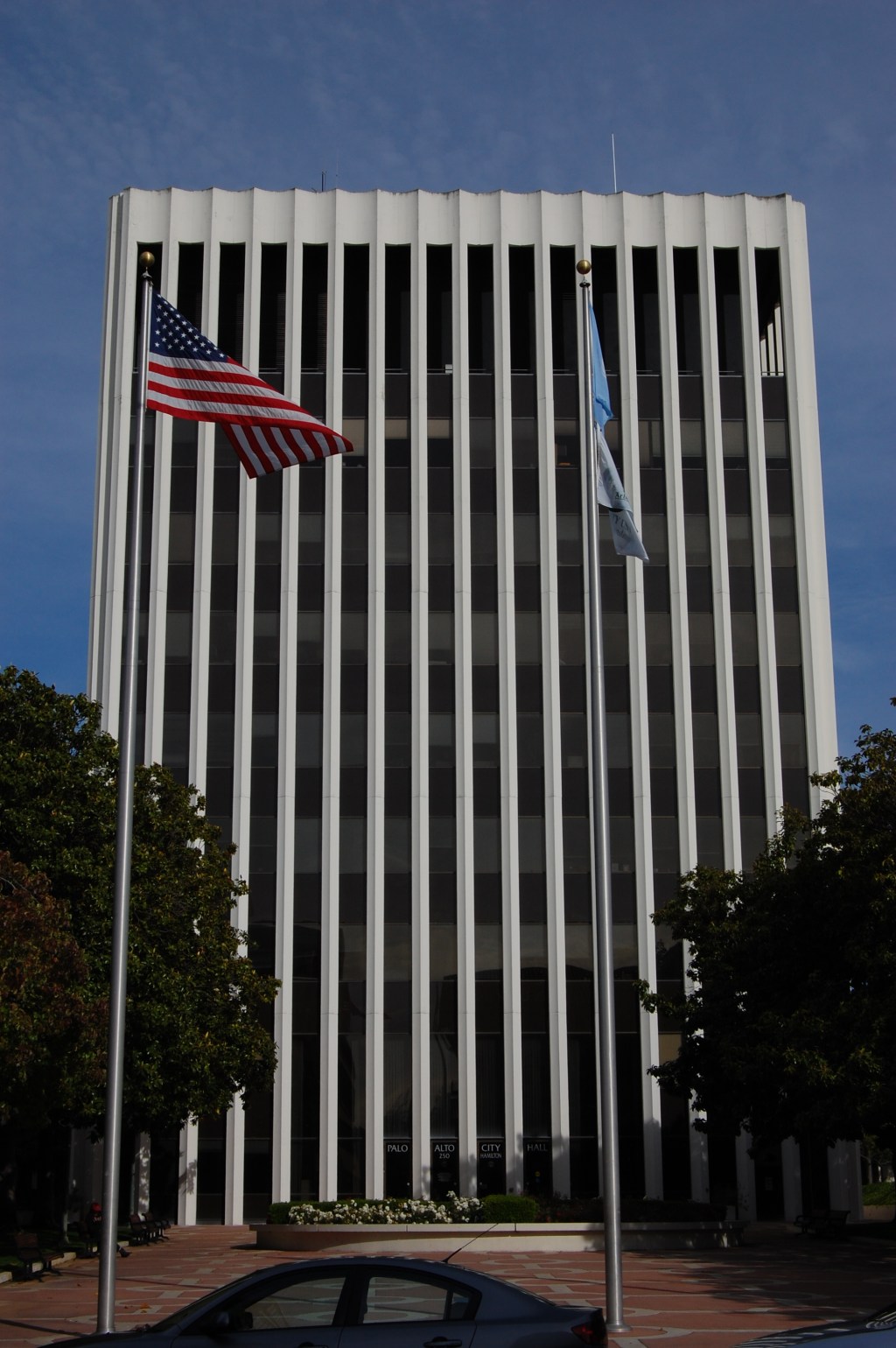
Top image: Palo Alto City Hall, 250 Hamilton Ave. Photo: Eugene Zelenko / CC BY-SA 4.0 via Wikimedia Commons
The Palo Alto City Council on Monday approved an ordinance that bars oversized vehicles, including RVs, from parking between 8 p.m. and 8 a.m. on streets within 100 feet of residential uses, including planned-home-zoning and mixed-use areas. The previous restriction ran from 2 a.m. to 6 a.m., according to Palo Alto Online. NBC Bay Area described the change as doubling the restricted hours; measured against the 2-to-6 a.m. window Palo Alto Online reported, the new rule triples them.
The dollars: the council moved about $140,000 from the city’s infrastructure reserve into its Parking Infrastructure Improvements project to pay for signs, according to the meeting summary published by Palo Alto Civic. Rather than posting every residential street, the city will place signs at roughly 50 entrances to the city, an approach staff said better manages fiscal and staff impacts, Palo Alto Online reported. The council also approved an expansion of the Embarcadero Road permit pilot.
The vote came on the consent calendar, where items pass together without separate debate. Palo Alto Civic’s summary records Councilmember Ed Lauing as voting no on the item after he asked staff to return in two weeks with visuals showing how the 100-foot distance would affect different neighborhoods. “It’s not just an arbitrary number, but I think that there’s some considerations there in terms of how you do the actual measurement of that as well and also how it affects each neighborhood,” Lauing said, as quoted by NBC Bay Area. NBC reported the council will revisit the 100-foot zone.
Who is affected
The city estimates about 150 RVs on its streets are being lived in, NBC Bay Area reported. The new rule does not reach business and industrial districts, where Palo Alto Online reported the vast majority of people living in RVs already park. Public commenters split: a Chamber of Commerce representative sought measurable criteria to keep vehicles from being displaced into commercial districts, while other speakers raised legal concerns and warned of the effect on people living in vehicles, according to Palo Alto Civic.
The ordinance is one step in a phased approach. In August the council approved a permit-parking pilot for RVs on sections of Embarcadero Road and Coyote Hill Road. “I think of it as a three-part plan, which is none in residential, none as second homes and then I think we’re likely to have enough space (in the permit pilot), especially if we can get some more lots,” Mayor Vicki Veenker told Palo Alto Online. Councilmember Julie Lythcott-Haims, who has urged stronger services before more restrictions, drew a line at second homes: “In my view, the city’s obligation is to those who are truly unhoused,” she told the publication.
Caltrain’s warning
The same evening, Caltrain briefed the council on contingency plans for fiscal 2028 if it cannot secure outside operating support: hourly trains, no weekend or special-event service, earlier nightly shutdowns and possible station closures, according to Palo Alto Civic. No service changes were adopted. Caltrain reported ridership at 80% of pre-pandemic levels, weekend ridership 200% above pre-pandemic levels and 95% on-time performance, and said Palo Alto and Stanford account for 75% of its GoPasses. The council voiced support for Caltrain and a regional funding measure but questioned whether new money would deliver lasting stability. It took no action.
Backing Menlo Park
After closed session, the council voted 7-0 to authorize the City Attorney’s Office to seek court permission to file a friend-of-the-court brief supporting Menlo Park in Willow Project LLC v. City of Menlo Park, Palo Alto Civic reported. The next step is a request for leave to file.
The long view
Each restriction Palo Alto adds pushes the same question further down the road: where people living in vehicles can legally be. With the residential ban widened and the permit pilot not yet operating, the practical effect is to concentrate RVs in commercial and industrial areas until the pilot opens. Watch for the staff return on the 100-foot measurement, the second-home crackdown the mayor has described, and the composition of the council after Nov. 3. Caltrain’s numbers matter just as much over the long run. A city that sells three of every four GoPasses has more riding on a regional transit funding measure than almost anyone on the line.


Leave a Reply