
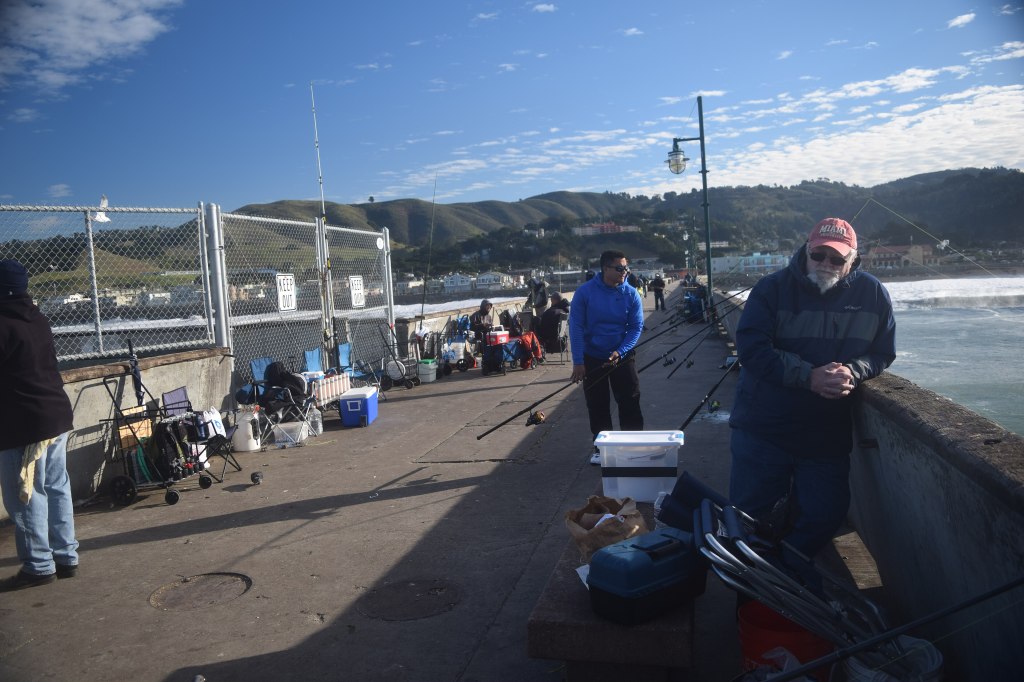
Top image: The Pacifica Municipal Pier, shown in 2016. The pier has been closed since June after structural damage. Photo: Екатериниа Владинакова / CC0 via Wikimedia Commons
San Mateo County is treating this winter’s El Niño as an emergency before a single storm has arrived. The Board of Supervisors on Tuesday adopted a resolution proclaiming a local emergency for the 2026-27 El Niño season, designating the Department of Emergency Management to lead response coordination and creating an interdepartmental El Niño Preparedness and Response Task Force.
The reason for acting early is in the forecast. According to the National Oceanic and Atmospheric Administration’s Oct. 8 outlook, cited in the county’s announcement, El Niño is strengthening, with a greater than 83% chance of a strong to very strong event through January-March 2027.
What the declaration does
Supervisor Ray Mueller, whose district includes much of the coastline, said the proclamation activates anti-gouging laws and lets the county move quickly to preposition resources, ABC7 News reported. He said the county has already begun activating contracts so crews can clear debris from streams, waterways and culverts, a lesson from 2023, when many of those areas “became jammed up with debris and fallen trees.”
The task force, led by Emergency Management Director Dr. Shruti Dhapodkar, runs through the end of March, The Almanac reported. The county says it will track work across departments and local agencies, including clearing drains and culverts, checking equipment, preparing sandbag sites and making sure alerts reach residents in multiple languages. Caltrans, PG&E and other agencies may take part.
“We cannot predict the storms, but we can prepare now,” Dhapodkar told supervisors, according to The Almanac.
The coastal number to watch
The most striking figure came from Mueller. King tides this year are projected at about 7 feet, he told ABC7, but “if one of the El Nino storms hits and it’s a severe one, those tide levels could rise to 10 feet. Well in San Mateo County we have never seen above 8 and a half so it would be an unprecedented impact to our coastline.”
County Executive Mike Callagy described the core risk as compounding hazards. “A storm arriving on a high tide, heavy rain falling on saturated hillsides, and wind damage during flooding each compound the others,” he said in the county’s statement.
That risk is visible in Pacifica, where the Municipal Pier has been closed since June after structural damage. The city said a crane was scheduled to begin mobilizing Oct. 21 for emergency stabilization work, ABC7 reported.
On the bay side, the memory is the winter of 2022-23, when New Year’s Eve storms flooded neighborhoods near the bay in Redwood City and spilled San Francisquito Creek into dozens of Menlo Park homes, according to The Almanac.
What officials are asking residents to do
The county’s list is practical:
- Sign up for SMC Alert at SMCAlert.info for emergency notifications.
- Find out whether your home or workplace is vulnerable to flooding or landslides.
- Make a household plan, including how to reach family and where to go if roads close.
- Keep water, food, medications, flashlights and batteries on hand for extended outages.
- Clear gutters and drains where safe and secure outdoor items.
- Never drive through flooded roads, and follow evacuation instructions.
- Ask your insurer about flood coverage; renters should consider renters’ insurance.
Sandbags are available in several cities, according to The Almanac, including at Menlo Park’s Burgess Park lot and Fire Station 77, East Palo Alto’s corporation yard at 150 Tara Road and Redwood City’s public works yard at 1400 Broadway. Redwood City has also launched an Adopt-a-Drain program.
“Roads may be closed, power may go out and people may find themselves cut off and isolated for periods of time,” Mueller said in the county’s statement.
The long view
Santa Clara County agencies have been preparing along their own creeks, and San Mateo’s move puts the Peninsula on an emergency footing well ahead of the season. Proclaiming an emergency before a disaster is a bet that the cost of preparation is lower than the cost of recovery. It also previews a climate future in which “once in a generation” tides arrive on top of rising seas. The coastal communities, bayfront neighborhoods and hillside roads most exposed this winter are the same places where the county’s longer-term adaptation choices, from shoreline protection to managed retreat, will eventually have to be made. This season will be a test of whether coordination built now becomes permanent infrastructure.
Sources
- County of San Mateo, “County Prepares for Winter Storms, Urges Residents to Do the Same,” Oct. 21, 2026
- San Mateo County Board of Supervisors, Resolution proclaiming a local emergency related to the 2026-27 El Niño season (via DocketCity), adopted Oct. 20, 2026
- ABC7 News, “10 foot tides possible this El Niño season along San Mateo Co. coast,” Oct. 21, 2026
- The Almanac, “San Mateo County declares El Niño state of emergency to prepare for winter storms,” Oct. 21, 2026


Leave a Reply