
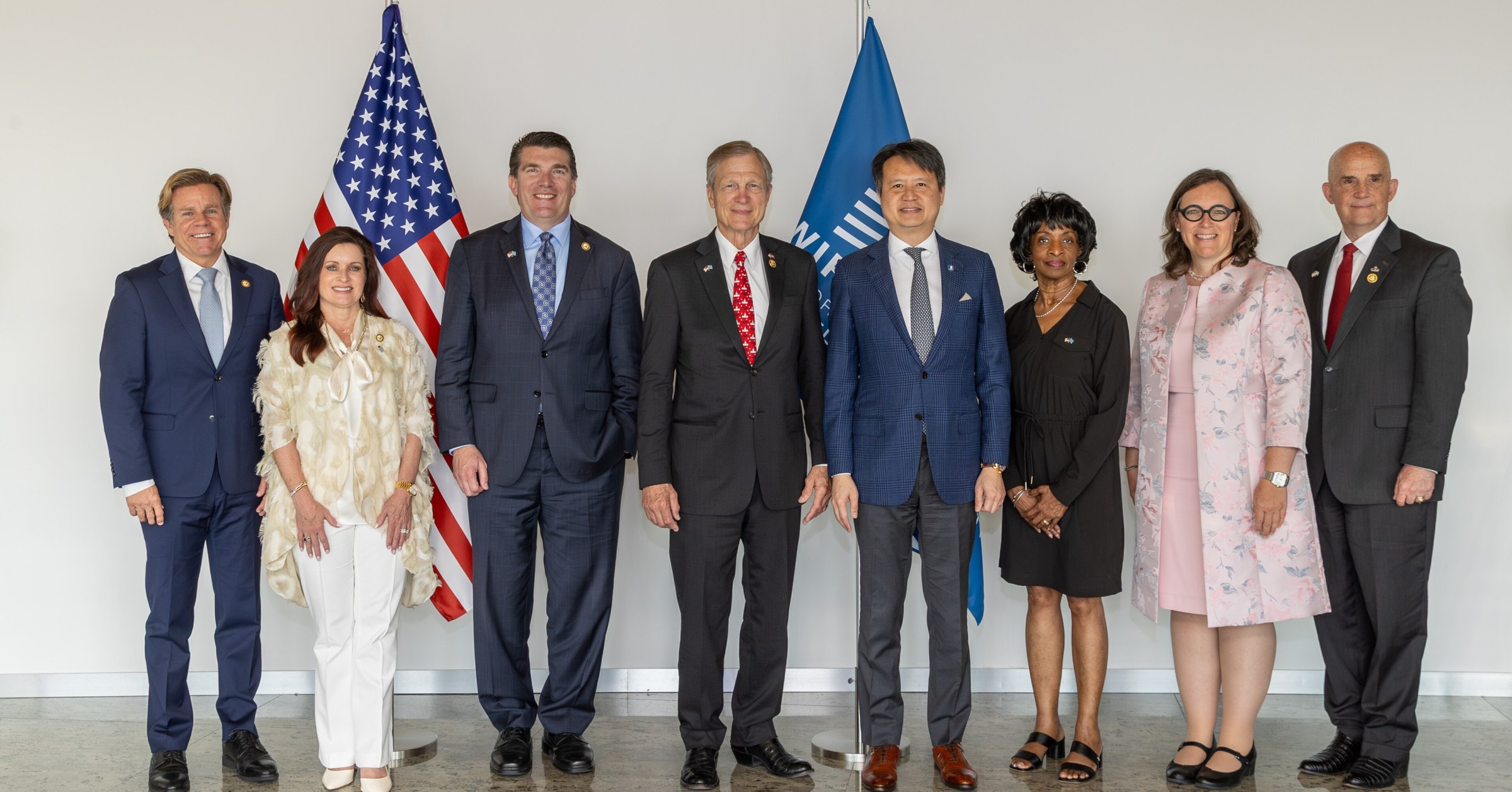
Top image: From left, Reps. Mike Haridopolos, Sheri Biggs, Jay Obernolte and Brian Babin, WIPO Director General Daren Tang and Rep. Valerie Foushee with other delegation members during a June 18, 2025, congressional delegation visit to the World Intellectual Property Organization. Photo: World Intellectual Property Organization / CC BY 4.0 via Wikimedia Commons
Four months after the House Science, Space, and Technology Committee approved ten bills on artificial intelligence, the package is still waiting for floor time. Congress has about five weeks of scheduled session left.
The committee approved all ten on June 25. Eight passed without a dissenting vote and the other two passed 34-1, according to congress.gov action records. As of Oct. 24 none had been brought to the House floor.
What’s in the package
Chairman Brian Babin, R-Texas, said the bills expand “access to cutting-edge research, strengthens our AI workforce, promotes responsible innovation, and bolsters our national security,” according to his office’s summary. Sponsors and committee votes come from congress.gov:
- H.R. 2385, CREATE AI Act (Rep. Jay Obernolte, R-Calif.). Establishes the National AI Research Resource, giving researchers and students access to computing and data. Vote: 29-0.
- H.R. 9363, AI Security and Innovation Act (Obernolte). Creates a Center for AI Security and Innovation at NIST, with no regulatory, rulemaking or enforcement authority. Vote: 29-0.
- H.R. 9333, AI Flaw Reporting and Security Enhancement Act (Rep. Deborah Ross, D-N.C.). Voluntary reporting of AI flaws through NIST, working with CISA. Vote: 35-0.
- H.R. 9334, Workforce for AI Trust Act (Rep. Zoe Lofgren, D-San José). An AI workforce framework at NIST. Vote: 35-0.
- H.R. 9341, AI-Ready Federal Data Guidelines Act (Babin). Guidelines for making federal data usable for AI. Vote: 29-0.
- H.R. 9372, Data Infrastructure Energy Measurement and Standards Act (Rep. Suhas Subramanyam, D-Va.). Ways to measure data centers’ energy and water use. Vote: 34-1.
- H.R. 8893, Protecting Consumers from Deceptive AI Act (Rep. Valerie Foushee, D-N.C.). Provenance and watermarking standards for AI-generated content. Vote: 35-0.
- H.R. 6461, READ AI Models Act (Rep. Sarah McBride, D-Del.). A standard documentation template for AI models. Vote: 35-0.
- H.R. 5351, NSF AI Education Act (Rep. Vince Fong, R-Calif.). NSF AI scholarships and up to eight community-college centers. Vote: 33-0.
- H.R. 5584, LIFT AI Act (Rep. Tom Kean Jr., R-N.J.). K-12 AI literacy grants. Vote: 34-1.
The local stake
Californians wrote four of the ten bills: two by Obernolte, one by Fong and one by Lofgren, the committee’s top Democrat, whose district covers much of San José.
The CREATE AI Act has the broadest support of the ten, with 36 cosponsors, according to congress.gov. They include Peninsula and South Bay Reps. Sam Liccardo and Kevin Mullin, Rep. Josh Harder of Stockton and Republican Rep. Young Kim of Southern California’s 40th District. The bill would give academic researchers and smaller companies access to the kind of computing power now mostly concentrated in large labs, many of them in the Bay Area.
Why no vote yet
The two parties on the committee describe the delay differently.
Babin’s office has presented the package as evidence that the committee can produce bipartisan AI policy. His June statement called it a “bipartisan package.” After a Sept. 15 committee briefing on AI security incidents, he said the goal was ensuring “that America—not the Chinese Communist Party—leads the global AI race.”
Lofgren supported the bills at markup but criticized how they got there. In a June 25 statement, she said the process “strayed from usual good faith efforts” and that Democratic proposals on youth exposure to AI, data centers and community colleges “were struck down by Republicans or completely barred from consideration.” In September she blamed House leadership for the delay: “Speaker Johnson hasn’t brought these bills up for a vote in the full House. The Speaker is apparently following President Trump’s admonition that we should do absolutely nothing to address the risks of AI.” That is Lofgren’s characterization. The Republican committee releases reviewed for this article do not respond to it.
The calendar
The House is out until after the election. The majority leader’s calendar and Roll Call show sessions resuming in November, with the last scheduled day in mid-December. Bills that do not pass both chambers by the end of the 119th Congress die and would have to be reintroduced in January.
Bipartisan committee bills often reach the floor under suspension of the rules, a fast-track procedure that limits debate and needs a two-thirds vote. Which bills come up, and when, is up to the majority leadership.
In the Senate, the Commerce Committee’s leaders have released competing AI frameworks: Chairman Ted Cruz’s sandbox approach and ranking member Maria Cantwell’s call for enforceable safety standards. See our Science & Tech Committees coverage for more.




Leave a Reply