
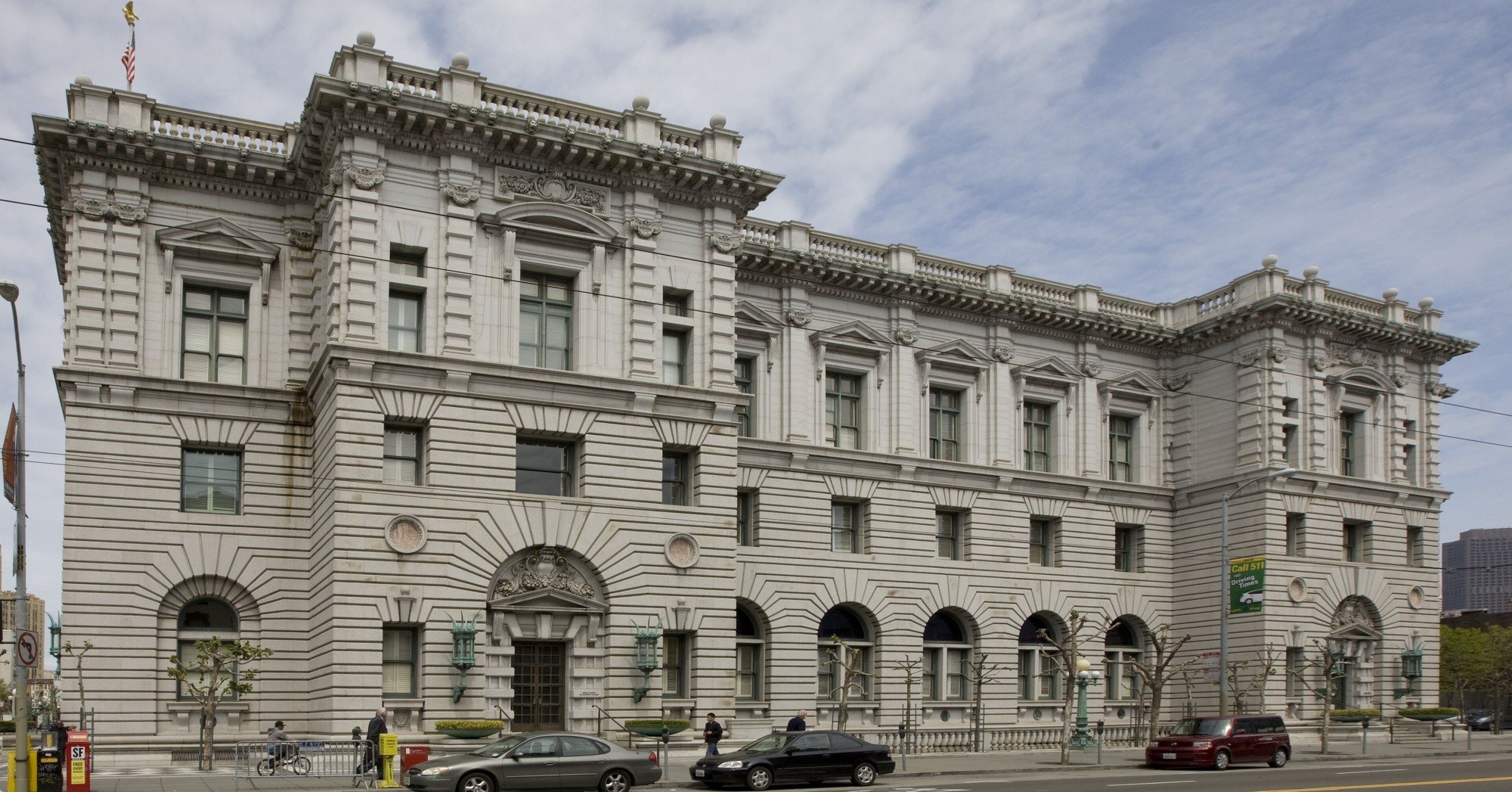
Top image: The James R. Browning U.S. Courthouse in San Francisco, home of the U.S. Court of Appeals for the Ninth Circuit. Photo: Carol M. Highsmith (public domain) via Wikimedia Commons
A three-judge panel of the U.S. Court of Appeals for the Ninth Circuit heard roughly two hours of argument on Sunday in the Justice Department’s emergency effort to require California to set aside mail ballots cast by people the department suspects are not U.S. citizens. The panel did not rule from the bench, and as of Monday morning no decision had been issued. Judge Mark Bennett said the court would act quickly, according to Politico, and the losing side could seek review at the Supreme Court with Election Day eight days away.
The Justice Department’s case
The administration’s argument is that the integrity of citizens’ votes is at stake. In a filing signed by Justice Department officials including Todd Blanche and Bill Essayli, the department wrote: “This is an emergency. Every minute of processing that occurs without segregating the ballots of suspected non-eligible voters causes untraceable disenfranchisement and dilution of the votes of United States citizens,” according to Politico.
The department filed suit on Oct. 15 in Los Angeles, seeking to have ballots from roughly 20,000 people sequestered while their eligibility is reviewed. Essayli has described the request as modest. “We’re not asking California to take any drastic steps other than to sequester the ballots,” he said, according to Politico, adding that 20,000 is “a minimum.” “That’s the floor.” DOJ attorney Matthew Donnelly argued the case on Sunday.
A Reuters review cited by NBC News identified 129 federal cases involving noncitizen voting.
California’s response
California, represented by Samuel Siegel of the state attorney general’s office, argued that county election officials have no legal authority to segregate ballots on the federal government’s say-so and no access to the federal immigration records the department relies on, according to Politico and NBC. The state also said that once signatures are verified, ballots are separated from their envelopes, so processed ballots can no longer be matched to individual voters. Los Angeles County alone had already processed some 331,000 ballots, Fox News reported. State officials described California’s existing eligibility safeguards as robust and questioned the reliability of the department’s data.
What the judges asked
The panel includes two Trump appointees, Bennett and Patrick Bumatay, and Biden appointee Gabriel Sanchez. Bennett questioned whether the requested order could be squared with state law. “It seems to me you want us to issue an injunction that is entirely inconsistent with the law the California Legislature has adopted,” he said, according to Politico. “How can we do that?” He added: “I just don’t see [federal law] telling California how to do the sorting.”
Sanchez raised whether the appeals court should act at all while U.S. District Judge David Carter, who is handling the case in Los Angeles, has a hearing scheduled for Tuesday, NBC reported. Bumatay voiced concern about changing election procedures so close to Election Day, a principle known as the Purcell doctrine, but appeared receptive to the department’s arguments about potential harm, according to election law scholar Rick Hasen’s account of the argument.
The local stakes
The dispute reaches into the South Bay. As the Chronicle reported Sunday, Santa Clara County is reviewing a federal letter concerning 902 of its voters. Any order from the Ninth Circuit or the Supreme Court would determine whether county registrars, including Santa Clara’s, must change how they handle ballots already in the counting process.
The long view
Whatever the panel decides, the case marks a new frontier in federal-state conflict over elections: a federal request, days before an election, that states pull specific ballots from the count based on federal data. The administration argues it is enforcing the constitutional principle that only citizens vote; California argues that elections are run by states under their own laws. The courts will have to decide how far federal authority reaches into a state’s counting process, and how close to Election Day judges should intervene. That answer, likely to be refined at the Supreme Court, will shape election administration well beyond 2026.
Sources
- Politico: Justice Department faces skeptical appeals court panel in California ballot fight (Oct. 25, 2026)
- NBC News: U.S. appeals court appears skeptical of Trump DOJ’s lawsuit over California voter rolls
- Election Law Blog: Ninth Circuit panel argument (Oct. 25, 2026)
- Fox News: California must respond to DOJ’s emergency request over ballots
- South Bay Chronicle: Ninth Circuit hears Justice Department’s ballot request (Oct. 25, 2026)


Leave a Reply