
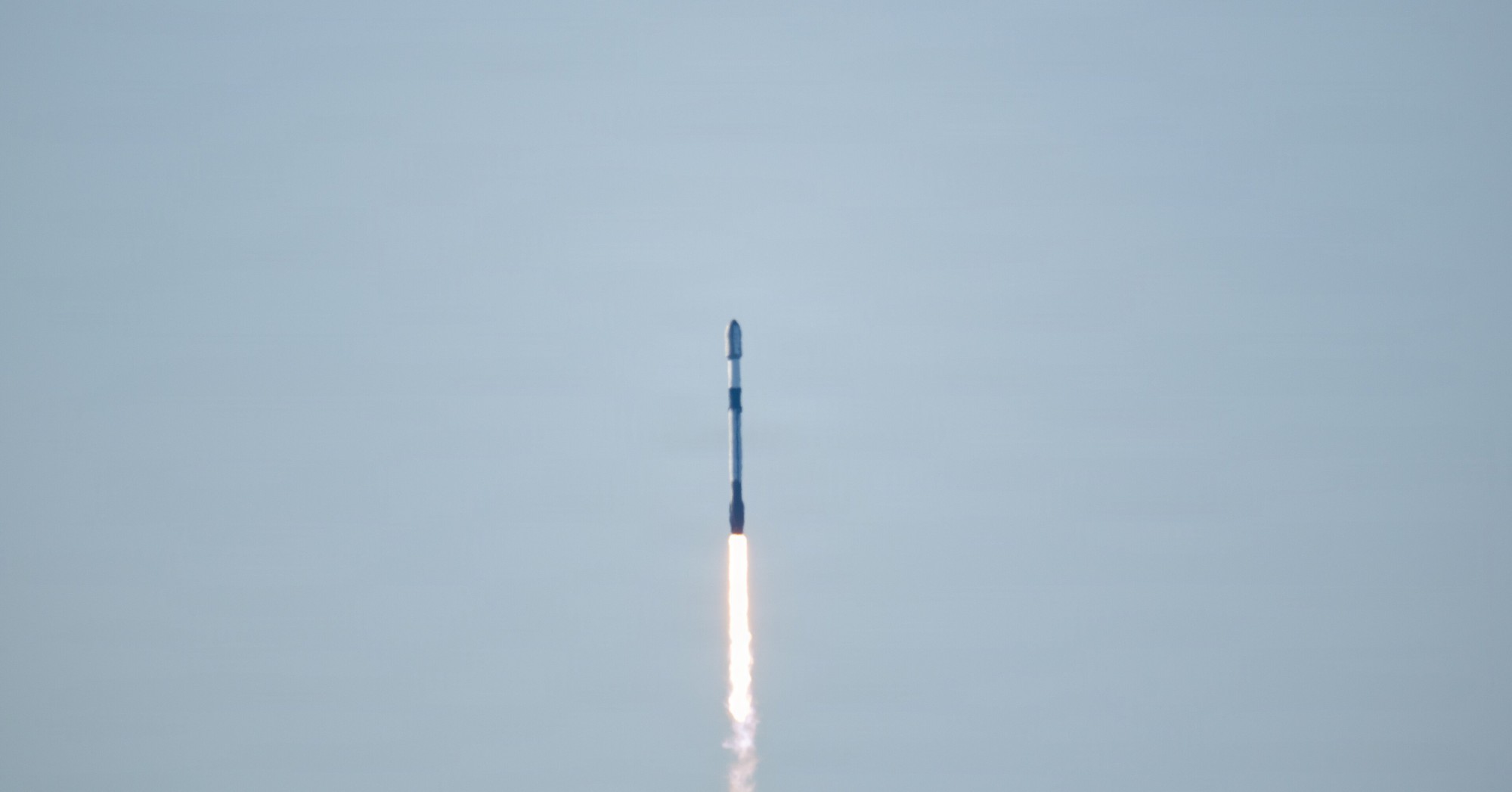
Top image: A SpaceX Falcon 9 rocket lifts off from Vandenberg Space Force Base. Photo: U.S. Space Force photo by 2nd Lt. Andrew Taller (public domain) via Wikimedia Commons
Three members of the Bay Area’s House delegation are pressing the White House for answers on one of the murkiest stories in national security this fall: who decided to limit SpaceX’s Starshield satellite service for Ukraine’s military, and why.
In an Oct. 23 letter to White House Chief of Staff Susie Wiles, Reps. Sam Liccardo, Jimmy Panetta and Ro Khanna, describing themselves as “Silicon Valley’s elected members in Congress,” called for a government-wide investigation and an initial briefing within 14 days. The San Francisco Standard and CNBC first reported the letter.
The administration’s position
President Trump has said the key fact is that service was restored. Asked Thursday whether he had called Musk about the restrictions, Trump declined to say. “Whether I called or whether somebody else called, doesn’t make any difference,” he told reporters, according to CNBC. “The bottom line, he put it back.” He has repeatedly denied involvement in the original decision. “I don’t know who did it, but I was not involved,” Trump said Wednesday.
Asked about the letter, the White House referred CNBC to the president’s Thursday comments. SpaceX did not respond to CNBC’s request for comment. Musk, SpaceX’s founder, has said the Pentagon owns and operates Starshield, the military version of the company’s Starlink network, the letter notes.
What the letter asks
The lawmakers frame the question starkly. “Either a private contractor independently made life-and-death national security decisions, or President Trump directed” the change, they wrote. The letter notes that Musk has denied responsibility and said the Pentagon owns and operates Starshield, and it cites conflicting accounts of who gave the order. The briefing it requests covers four points: who made the decision to restrict Starshield speeds in Ukraine, including any involvement by Trump or Musk; how the restrictions were implemented; whether contractual obligations were violated; and whether federal contracts with SpaceX and other Musk-affiliated businesses have safeguards against unilateral service disruptions.
The members also made an economic argument aimed at their own district base, writing that “politically motivated service interruptions or erratic throttling” could damage the credibility of American technology abroad. And they tied the issue to domestic broadband: if SpaceX cannot provide reliable service for national security missions, they wrote, Congress must consider “whether to entrust over $700 million in taxpayer dollars” to the company under the federal Broadband Equity, Access, and Deployment (BEAD) program.
How the story unfolded
The letter caps two weeks of conflicting reports. On Oct. 16, CNBC relayed a Reuters report that the order to limit Starshield for Ukraine came from inside the White House. The Wall Street Journal then reported that Musk had ordered the slowdown, and on Oct. 22, CNBC relayed a further Journal report, citing U.S. officials, that Trump had asked Musk to lift it and that the system was working more normally shortly after their call. A day later, Ukrainian officials said some restrictions remained despite assurances from Washington.
Senators have already moved. Sen. Richard Blumenthal, D-Conn., opened an inquiry on Oct. 22, CNBC reported, and Sen. John Cornyn, R-Texas, told the network he did not believe Musk would throttle the service without “at least the acquiescence of the White House.” On Oct. 15, Sens. Jeanne Shaheen, D-N.H., and Thom Tillis, R-N.C., led a bipartisan group of nine senators asking the Pentagon’s inspector general to investigate the disruptions, which gives the House members’ request a cross-party echo on the other side of the Capitol.
Why three Bay Area members
The signers framed their standing in economic terms, saying they represent “hundreds of innovation economy employers and workers whose livelihoods depend on the credibility of American technology abroad.” Liccardo and Khanna represent the core of Silicon Valley, and Panetta’s Central Coast district reaches into the South Bay’s southern edge. For Khanna, widely seen as a likely 2028 Democratic presidential contender, the letter fits a long-running theme of his: that the government should partner with technology companies while insisting on public accountability for how their power is used.
The questions also reach beyond Ukraine. As commercial satellite networks become part of how the U.S. and its allies fight, communicate and deliver broadband, the line between a contractor’s business decision and a government policy decision matters for every company in the space industry, including the many suppliers and startups in the Bay Area.
What comes next
The 14-day window in the letter runs to early November, around the Nov. 3 midterm. CNBC reported that the letter signals Starshield will be a top investigative priority for Democrats if they win the House, which would give them committee subpoena power. “We will ensure that the 120th Congress will closely scrutinize federal funding awarded to Mr. Musk’s businesses,” the members wrote. The Senate inspector general request remains pending, and Ukraine’s statements about continuing restrictions suggest the operational question is not settled.
The long view
The Starshield episode is a test case for a new kind of dependency. Washington increasingly relies on privately built, privately run space infrastructure, and the administration’s position, that the service is back and that is what counts, reflects a results-first view of that partnership. Lawmakers in both chambers want the process on the record as well. However the facts land, the answer will shape how Congress writes the rules for the commercial space companies, many with deep Silicon Valley roots, that are becoming instruments of national power.





Leave a Reply