
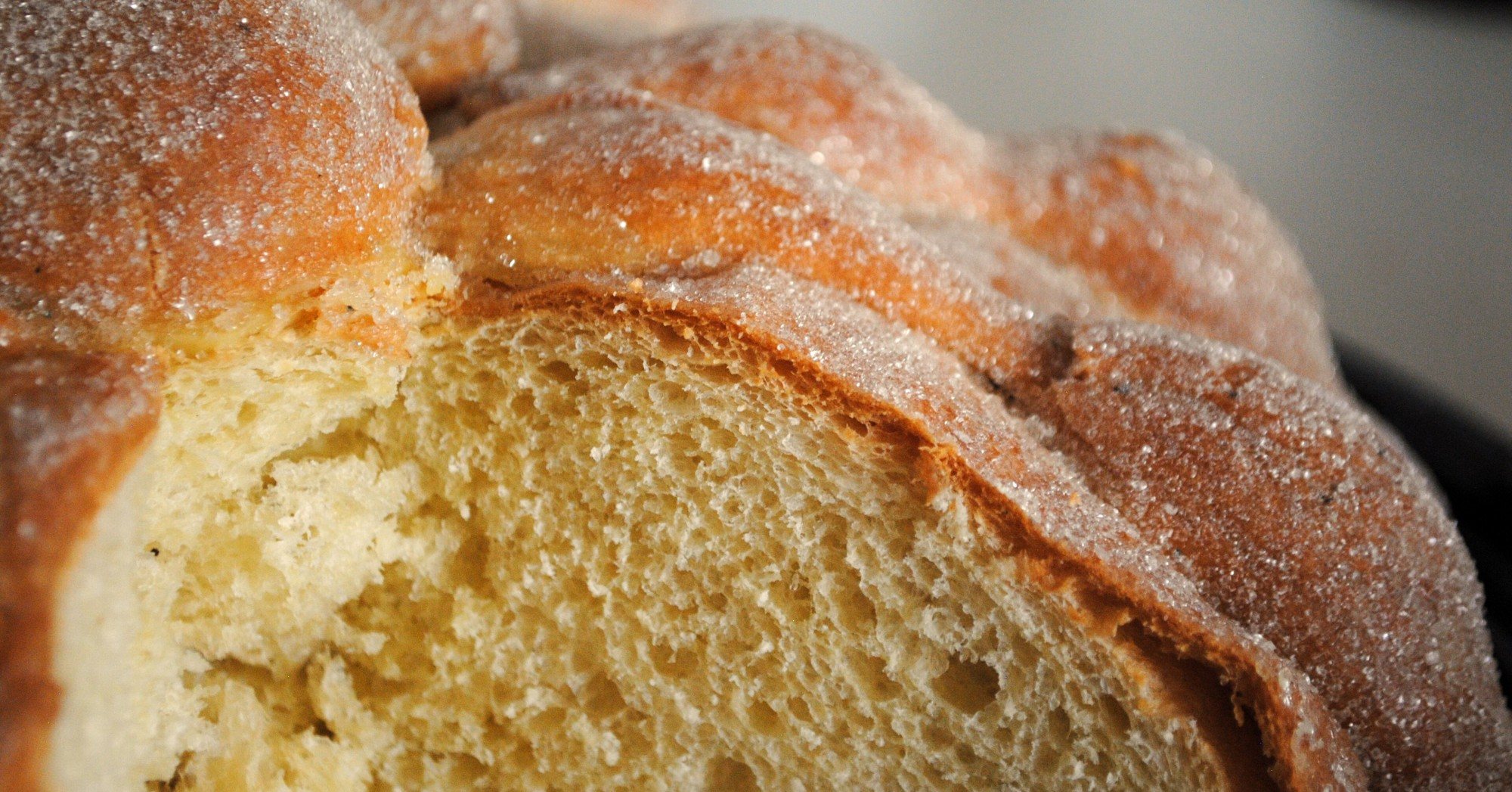
Top image: Pan de muerto, the sweet bread traditionally baked for Día de los Muertos. Photo: ProtoplasmaKid / CC BY-SA 4.0 via Wikimedia Commons
Día de los Muertos, observed Nov. 1 and 2, is a holiday built around food: the bread, moles and drinks families set on ofrendas for returning loved ones, and the meals shared afterward. Across the South Bay and Peninsula, restaurants have added seasonal specialties and community groups have scheduled celebrations with food vendors. Here is what has been published about both, with prices as reported and dates as listed by organizers.
Seasonal dishes, as reported
The Mercury News surveyed holiday dishes at Bay Area restaurants in an Oct. 20 guide. Among the local entries, with prices as listed in that report:
- Acopio, San José. Owner Lorena Vidrio and chef Mimi Mendoza are serving Pan de Muerto con Pozol ($10) at dinner and brunch through Nov. 2, according to the Mercury News, pairing the orange blossom-scented bread with pozol, a pre-Columbian drink of masa, cacao and piloncillo. The menu also lists a Shandy-Baza cocktail ($13) and Calabaza en Tacha, a candied squash dessert ($14). The restaurant is at 399 S. 24th St.; the report lists dinner Wednesday through Saturday and brunch Sundays 10 a.m. to 3 p.m.
- Mezcal, downtown San José. Owner Adolfo Gomez, who opened the Oaxacan restaurant in 2008, told the Mercury News that the family’s mole negro, made with 35 ingredients, takes two days to prepare. It is offered as a chicken mole platter ($26), enchiladas ($16) and tamal de mole ($8). Mezcal is at 25 W. San Fernando St.
- San Agus Cocina Urbana, Palo Alto. The Mexico City-inspired restaurant at 115 Hamilton Ave. lists chapulines, toasted grasshoppers, as a $5 side, the paper reported.
- Con Azucar Cafe. The Mexican cafe chain, which started in downtown San José in 2022 and now has locations including Redwood City and Gilroy, serves café de olla as its house coffee ($3.50 for 12 ounces), according to the guide.
- Casa Mia, San Carlos. The Mercury News reported that the restaurant’s newly opened San Carlos location serves caramel flan ($9).
Prices are as published by the Mercury News on Oct. 20 and may change; check with each restaurant.
Celebrations with food on the menu
- History Park, San José, Oct. 31-Nov. 1. The Aztec dance group Calpulli Tonahlehqueh lists its annual Día de Muertos festival at History Park, 635 Phelan Ave., as free and alcohol-free, with food trucks. Organizers note VTA bus line 73 serves the park and parking is $6.
- Santana Row, Sunday, Nov. 1. San José’s visitor bureau lists a celebration with a market from noon to 5 p.m., mariachi and a Día de los Muertos brunch at Zazil.
- Children’s Discovery Museum, Nov. 1. The museum at 180 Woz Way lists a Día de los Muertos event from 10 a.m. to 3:30 p.m.
- Across the Peninsula. The Redwood City Pulse compiled a calendar that includes an event at the College of San Mateo on Oct. 29 (5 to 7:30 p.m.); Millbrae on Oct. 30 (6 to 8 p.m.); Skylawn on Oct. 31 and Nov. 1; a Noche de Lotería in Colma on Nov. 6 (6 to 8 p.m.) with pan dulce and cocoa; Mountain View’s Civic Center on Nov. 7 (11 a.m. to 4 p.m.); and Redwood City’s Día de Muertos celebration at Courthouse Square, 2200 Broadway, on Nov. 8 from 3 to 8:30 p.m., with food vendors and a Tlaxcala theme.
Schedules come from organizers’ listings as of Oct. 26 and can change; confirm before going.
The long view
The restaurants on this list tell a story about the South Bay’s food economy. Several are owner-operated businesses with family recipes and regional Mexican specialties, Oaxacan mole at Mezcal and pre-Columbian pozol at Acopio, whose holiday dishes drew regional coverage this season. Con Azucar’s expansion from one downtown San José cafe in 2022 to locations across the state shows how a neighborhood concept rooted in Mexican tradition can scale. And the growth of free, family-oriented celebrations from Colma to San José reflects how a holiday once observed mostly at home and in cemeteries has become a shared civic event in the Bay Area, one that draws people together around a table.
Sources
- The Mercury News: Día de los Muertos dining: 7 holiday dishes at 7 Bay Area restaurants (Oct. 20, 2026)
- Calpulli Tonahlehqueh: Día de Muertos 2026
- San José visitor bureau: Día de los Muertos celebration at Santana Row
- Children’s Discovery Museum: Día de los Muertos
- Redwood City Pulse: How to celebrate Día de los Muertos in Silicon Valley (Oct. 22, 2026)


Leave a Reply