
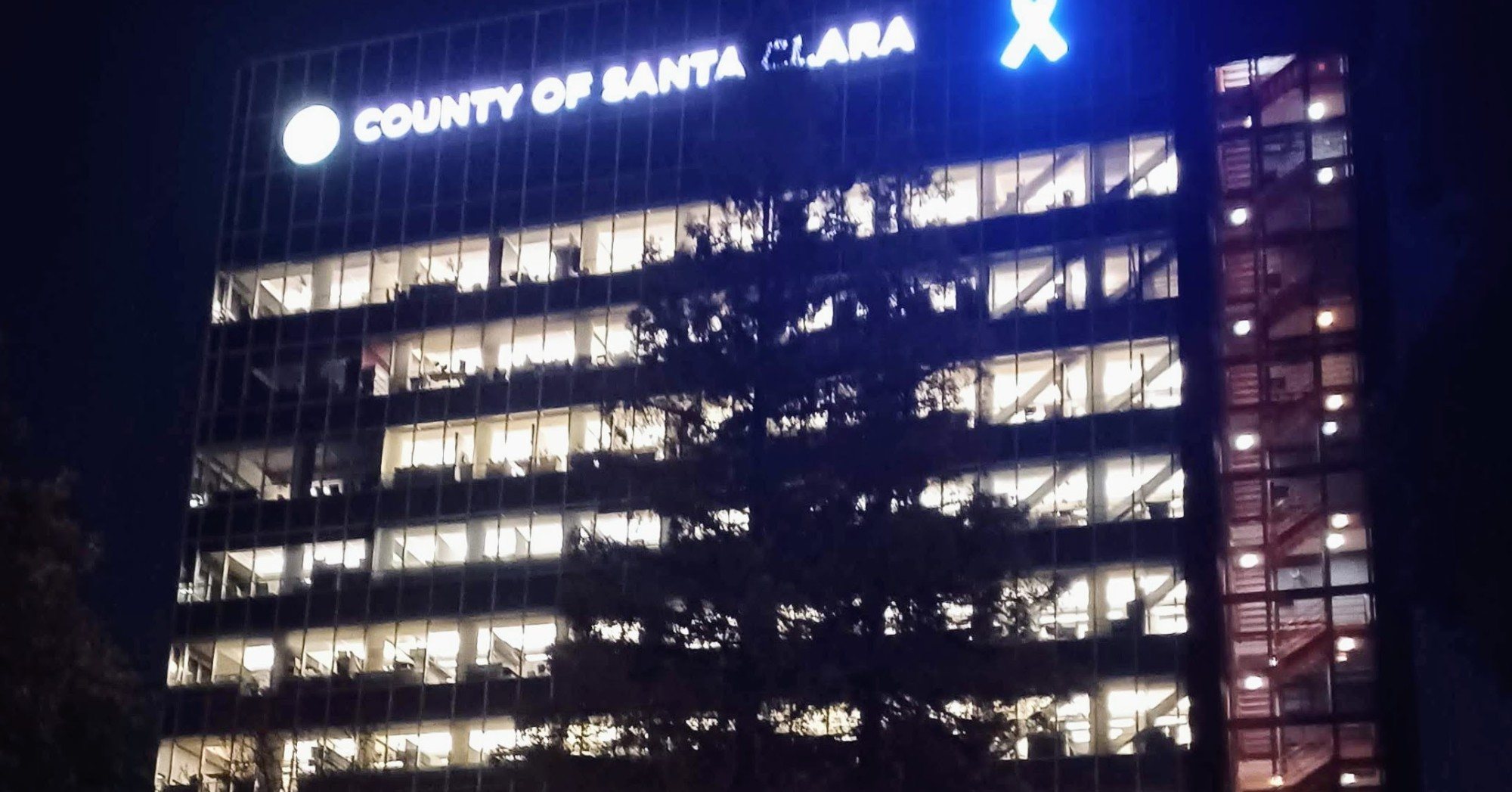
Top image: The County of Santa Clara Government Center in San José at night. Photo: Xnatedawgx / CC BY-SA 4.0 via Wikimedia Commons
Santa Clara County’s property tax base has reached another record, but the details of this year’s numbers show a market splitting along price lines. The county’s assessment roll, the total net assessed value of all real estate and business personal property, reached $760.1 billion for the 2026-27 fiscal year, up $34.4 billion, or 4.7%, from the year before, according to the Assessor’s Office annual report as reported Sunday by San José Spotlight. Last year’s growth was just over 4%.
Where the growth came from
Sales did most of the work. Changes in ownership, which reset a property’s assessed value to market price under Proposition 13, accounted for nearly $16.9 billion of the increase. Residential property accounted for 82% of the change in value, the Spotlight reported. New construction, including multifamily housing, office buildings and data centers, added nearly $5 billion.
The annual Prop. 13 inflation adjustment, capped at 2%, added $13.1 billion, according to the Spotlight’s account of the report. A statewide review by the California Taxpayers Association in July put Santa Clara County’s inflation-factor contribution at about $14 billion. The Chronicle could not reach the assessor’s website to reconcile the figures and will update this story if the office clarifies.
The decline-in-value surge
The more striking number is lower in the report. Santa Clara County placed 24,727 properties in Proposition 8 decline status this year, nearly triple the previous year, according to the Spotlight. Prop. 8 allows a temporary reduction when a property’s market value falls below its Prop. 13 assessed value. The reductions were driven primarily by condominiums and townhomes.
That squares with what agents are seeing. Andrew Oldham, a residential agent with Compass, told the Spotlight that some homes priced below $2 million have lost value in recent months. “The Los Altos-Palo Alto luxury market is pulling that number up, but I suspect the decline in (fair market value) on ‘affordable’ homes is going to begin to have an impact,” he said. “The K-shaped economy (is) having a real impact in Santa Clara County.”
Commercial properties also saw more reductions: the number receiving assessment cuts rose 36%, and the value of those adjustments rose 24%, according to the report.
A turning commercial market
The office market, however, is showing momentum. The Spotlight cited CBRE figures showing Silicon Valley office leasing topped 4 million square feet in the third quarter, the highest quarterly total since 2019, and vacancy fell to 14.1% from 15.1% the prior quarter. Jonathan Hanhan, a commercial real estate professional with Compass, said commercial prices appear to have bottomed out after three years of interest-rate pressure and are beginning to rise, with AI infrastructure investment helping drive activity.
Growth also varied by city: Sunnyvale’s roll grew more than 7%, while Santa Clara’s grew about 3.7%, the Spotlight reported.
The assessor’s caution
Assessor Neysa Fligor pointed to borrowing costs as the key risk. “The cost of money (mortgage rates) will be significant, potentially restricting sales transactions, which is the biggest driver of roll growth,” she told the Spotlight. She also cited uncertainty over state building requirements and local rules for data centers and other AI-related businesses. “We also can’t ignore the political climate — national, state and local — and its impact on the real estate market,” Fligor said.
The long view
The roll is the foundation for property tax revenue to the county, cities, schools and special districts, and this year’s report suggests that foundation rests increasingly on one kind of transaction: the sale of higher-end homes. The near-tripling of Prop. 8 reductions, concentrated in condos and townhomes, is an early sign that the region’s entry-level ownership market is softening even as its luxury tier holds firm. If AI-driven leasing continues to lift commercial values, it could offset some of that pressure. If mortgage rates stay high and sales slow, the county’s main engine of roll growth will slow with them, and local budgets built on steady 4% to 5% gains will feel it.



Leave a Reply