
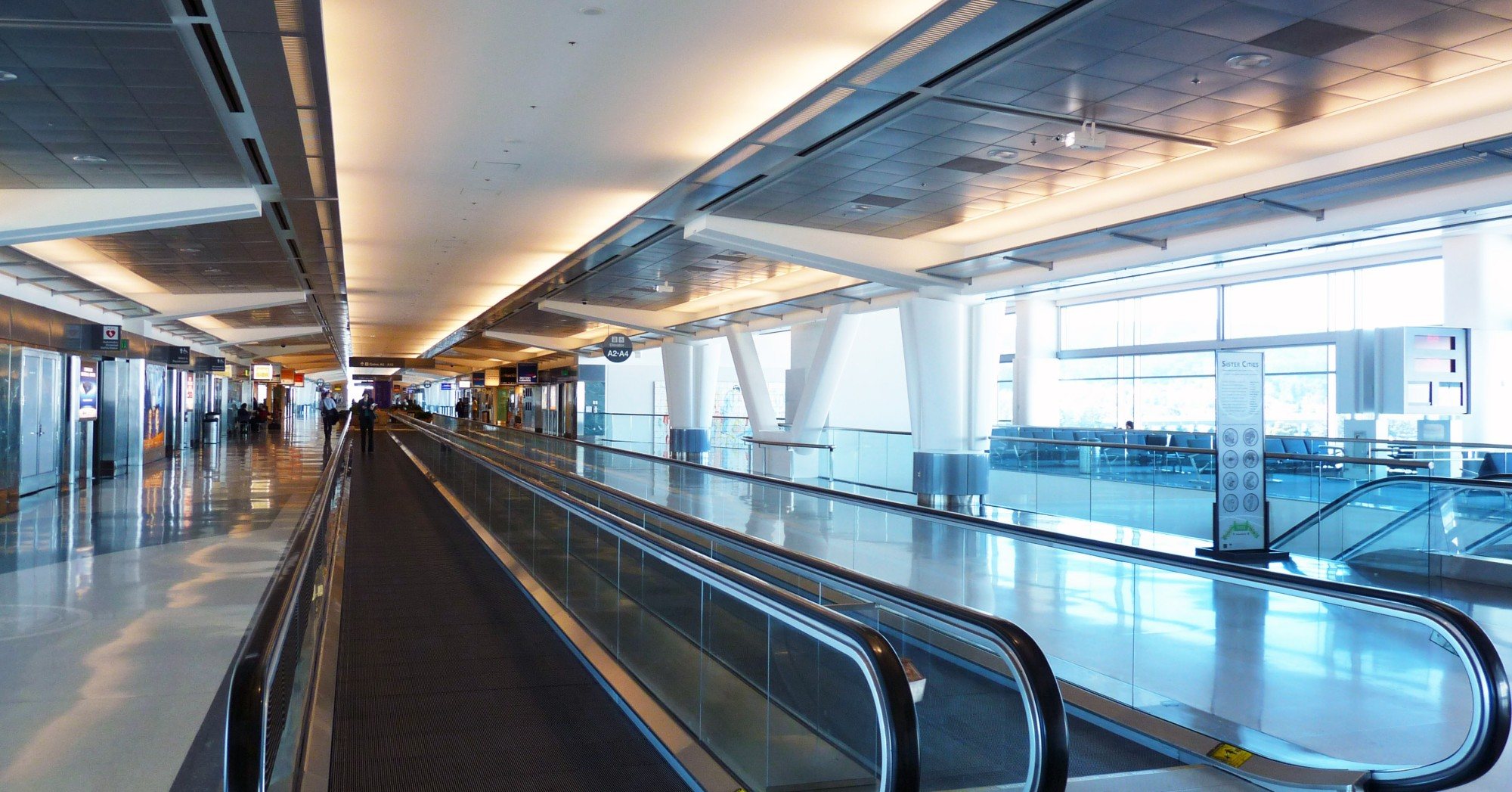
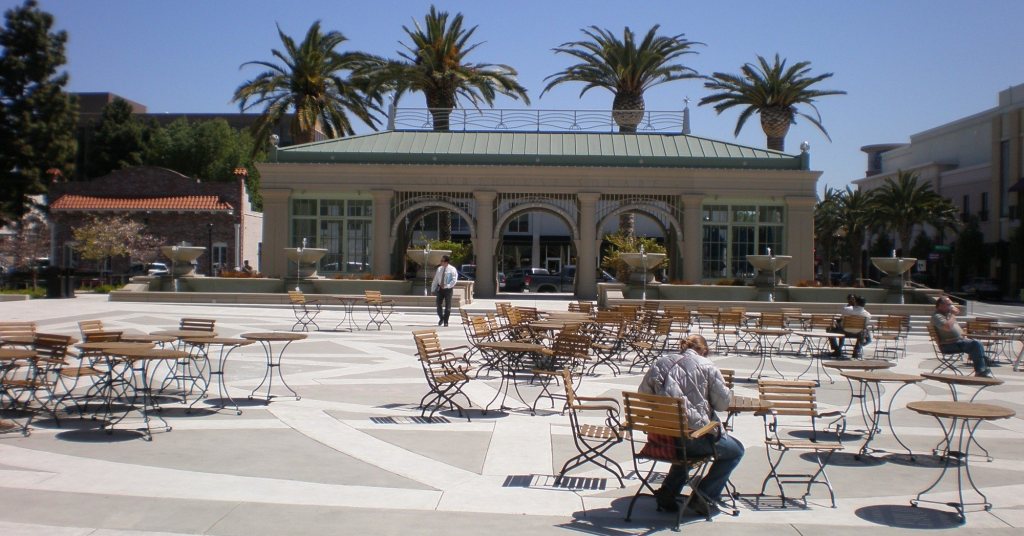
Top image: A walkway in San Francisco International Airport’s International Terminal, 2009. Photo: Craig Howell from San Carlos, CA, USA / CC BY 2.0 via Wikimedia Commons
For most travelers, San Francisco International Airport’s International Terminal is a place to pass through. For members of the Bay Area’s congressional delegation, a windowless room inside it has become a regular destination. On Oct. 21, Reps. Zoe Lofgren (CA-18), Kevin Mullin (CA-15), Jared Huffman (CA-02) and Aisha Wahab (CA-14) made an unannounced oversight visit to the U.S. Customs and Border Protection area where some arriving travelers have been held while their admission is decided.
“We are at SFO today to fulfill our responsibility as Members of Congress to conduct oversight and ensure that individuals in federal custody are being treated in accordance with the law,” the members said in a statement released by Lofgren’s office. “There have been concerning reports of some people being detained for multiple days in a facility that was not designed for that purpose.” The members were admitted without advance notice. The release noted that Sens. Alex Padilla and Adam Schiff had also visited the facility this month, and that Rep. Sam Liccardo’s (CA-16) office supported the visit, though he was unable to attend in person.
What CBP says
Customs and Border Protection has defended its handling of travelers at ports of entry. CBP spokesperson Jaime Ruiz told Diya TV that ports of entry are guided to provide fair and dignified treatment to travelers and that officers must follow the law, regulations and court decisions. Travelers seeking admission, Ruiz said, must establish their eligibility to enter the United States.
That legal framework matters to the dispute. Federal immigration law permits officers to deny admission to noncitizens, including some lawful permanent residents, who have certain criminal convictions, and CBP has confirmed it has held some green-card holders for multiple days while it awaits certified court records needed to resolve their cases, according to the San Mateo Record. The question the lawmakers have raised is not whether CBP may hold travelers to make those determinations, but where and for how long.
How the visits began
The oversight push started with Mullin. The San Mateo Record reported that he was turned away when he tried to inspect the area on Aug. 20 and gained access on Aug. 26. Inside, according to Mullin’s account and the Record, he found five people held in an “in transit lounge” of roughly 3,000 square feet in the International Terminal, with no windows.
The Record, citing San Francisco Chronicle data analysis, reported that SFO ranks second only to Miami among U.S. airports in detentions lasting longer than 72 hours, and that 19 of 25 people in that category were green-card holders. Members’ right to make unannounced visits has been tested in court: according to the Record, a federal district court in Washington upheld such visits in March, and an appeals court denied the government’s request for a stay in May.
Padilla followed with his own unannounced visit on Oct. 1. In a release the next day, his office described the area as a “de facto immigration detention facility” and said it was his third visit to a detention site this year.
A delegation-wide effort
The cadence of visits, from two senators and at least four House members across August, September and October, makes the SFO holding area an unusually frequent oversight stop. It also reflects a sustained, coordinated approach within the delegation. Mullin, whose district includes the airport, was the first member of Congress to visit, according to the Lofgren release, and in June Lofgren and Mullin also inspected the California City Detention Center, which the release describes as the largest ICE facility operating in the state.
None of the members’ statements so far has alleged that specific laws were broken. Their focus has been on conditions and duration: whether a space designed for short waits in transit is appropriate for multi-day stays, and how long people are held there. CBP’s position, as stated by Ruiz, is that officers are already bound to treat travelers with dignity under existing rules.
The long view
SFO’s holding area sits at the intersection of two long-running debates: how aggressively the federal government should screen lawful permanent residents with old convictions when they return from abroad, and how much visibility Congress should have into facilities that are not formally detention centers. The administration has made stricter enforcement at the border and at ports of entry a central priority, and it has the legal authority to make admissibility determinations. Bay Area lawmakers, for their part, are using one of the few tools available to a minority party, the unannounced visit, to document conditions.
For a region whose economy depends on global talent and international travel, the outcome of that tension at SFO will be watched closely by employers, universities and immigrant communities alike. Expect the visits to continue.
Sources
- Statement from Reps. Lofgren, Mullin, Huffman and Wahab on SFO oversight visit, Oct. 21, 2026 (via CapitolReleases)
- Sen. Alex Padilla: Unannounced oversight visit of SFO facility (Oct. 2, 2026)
- Rep. Kevin Mullin: Surprise oversight visit at SFO (Sept. 1, 2026)
- San Mateo Record: Rep. Mullin tours SFO detention site after CBP blocked visit
- Diya TV: SFO airport detentions raise concerns for immigrants


Leave a Reply