
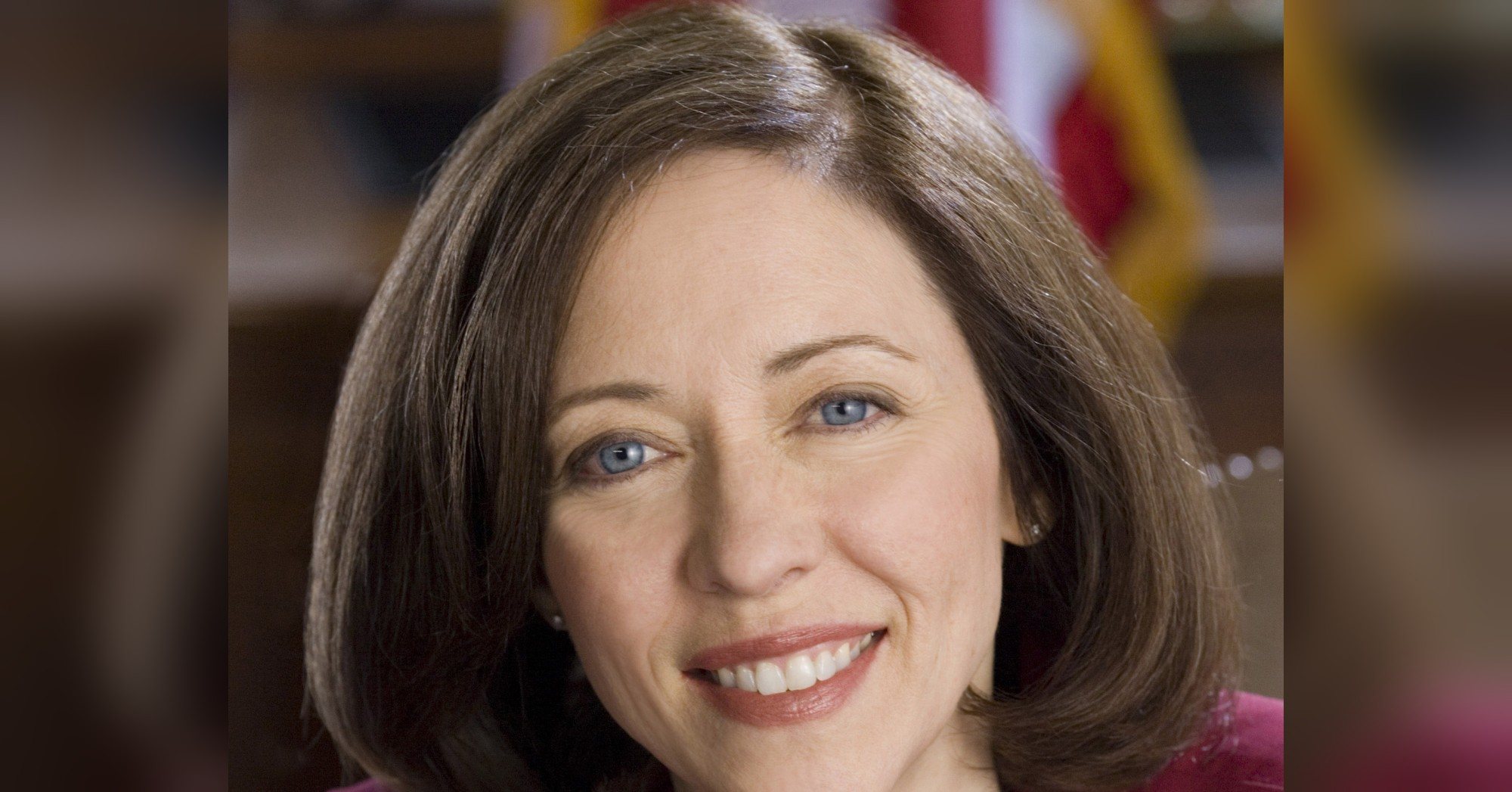
Top image: Sen. Maria Cantwell, D-Wash., ranking member of the Senate Commerce, Science and Transportation Committee, in her official Senate portrait. Photo: United States Senate (public domain) via Wikimedia Commons
When Anthropic filed to go public on Monday, its registration statement gave the Senate Commerce, Science and Transportation Committee a concrete example to work with: a frontier AI developer describing the risks of its own technology in a document filed under federal securities law. The committee’s two leaders want to regulate those risks in very different ways.
What Anthropic told investors
Among the risk factors in its Form S-1 filed with the Securities and Exchange Commission, Anthropic warns: “Our AI models may behave in unintended, misaligned, or autonomous ways, including by taking harmful actions that no user or third party directed.” It also tells investors that “our business is subject to an evolving and uncertain regulatory and political environment.” The filing describes Anthropic as a public benefit corporation. According to the filing and the company’s announcement, a separate Long-Term Benefit Trust elects a majority of its board.
Federal securities law attaches legal liability to material misstatements in a registration statement. That gives these warnings a different weight from a blog post or a voluntary safety report.
Cantwell: disclosure modeled on public companies
Sen. Maria Cantwell of Washington, the committee’s ranking Democrat, laid out a six-part framework for frontier AI on Oct. 7. “To manage risks from advanced AI systems we need clear safety standards, continuous testing, and reporting of serious failures,” she said in a committee release.
One of the six principles calls for exactly the kind of document Anthropic just filed. “Developers should provide clear, plain-language disclosures of material safety and security risks, and mitigation modeled on the risk disclosures public companies provide to investors,” the framework says. It also calls for:
- Safety standards developed through the National Institute of Standards and Technology, with independent audits before release.
- Mandatory reporting of serious incidents, including loss of control over autonomous agents, dangerous cyber capabilities, failures of critical safeguards and unsafe recursive self-improvement.
- Whistleblower protections, and a U.S.-China crisis communication channel on AI.
Roll Call’s coverage framed the plan around a federal testing role in AI safety.
Cruz: room to experiment
Sen. Ted Cruz of Texas, the committee’s Republican chairman, has taken the opposite approach. His SANDBOX Act, S. 2750, introduced Sept. 10, 2025, would let AI developers apply for two-year waivers from federal regulations, renewable up to four times, with the White House Office of Science and Technology Policy having final say. As Lawfare’s Jakub Kraus explained, the waivers could not override statutes or state law. Cruz has paired the bill with what he calls “Pillars for a Light-Touch Regulatory Framework.”
“To lead in AI, the United States cannot allow regulation, even the supposedly benign kind, to choke innovation or adoption,” Cruz has said, according to Lawfare. Lawfare also noted that the Commerce Committee handles about 37% of AI bills introduced in the Senate, which gives its chairman substantial influence over what reaches the floor.
Why it matters for the Bay Area
Anthropic is headquartered in San Francisco. Its filing, along with the disclosures that other Bay Area labs would make if they followed it to market, may turn an abstract committee debate into a practical one. If S-1 risk factors become the de facto standard for AI disclosure, Cantwell’s model would arrive partly through the securities laws rather than new legislation. If Cruz’s approach prevails, companies would disclose what securities law requires and keep their flexibility on everything else.
Sources
- SEC: Anthropic PBC Form S-1 registration statement (Oct. 26)
- Anthropic: announcement of S-1 filing
- Senate Commerce Committee (minority): Cantwell outlines governance framework for safe and secure frontier AI (Oct. 7)
- Roll Call: Cantwell looks to federal testing role in AI safety framework (Oct. 7)
- Lawfare: Ted Cruz has a detailed plan to loosen AI regulations (Jan. 26)
- Congress.gov: S. 2750, SANDBOX Act



Leave a Reply