
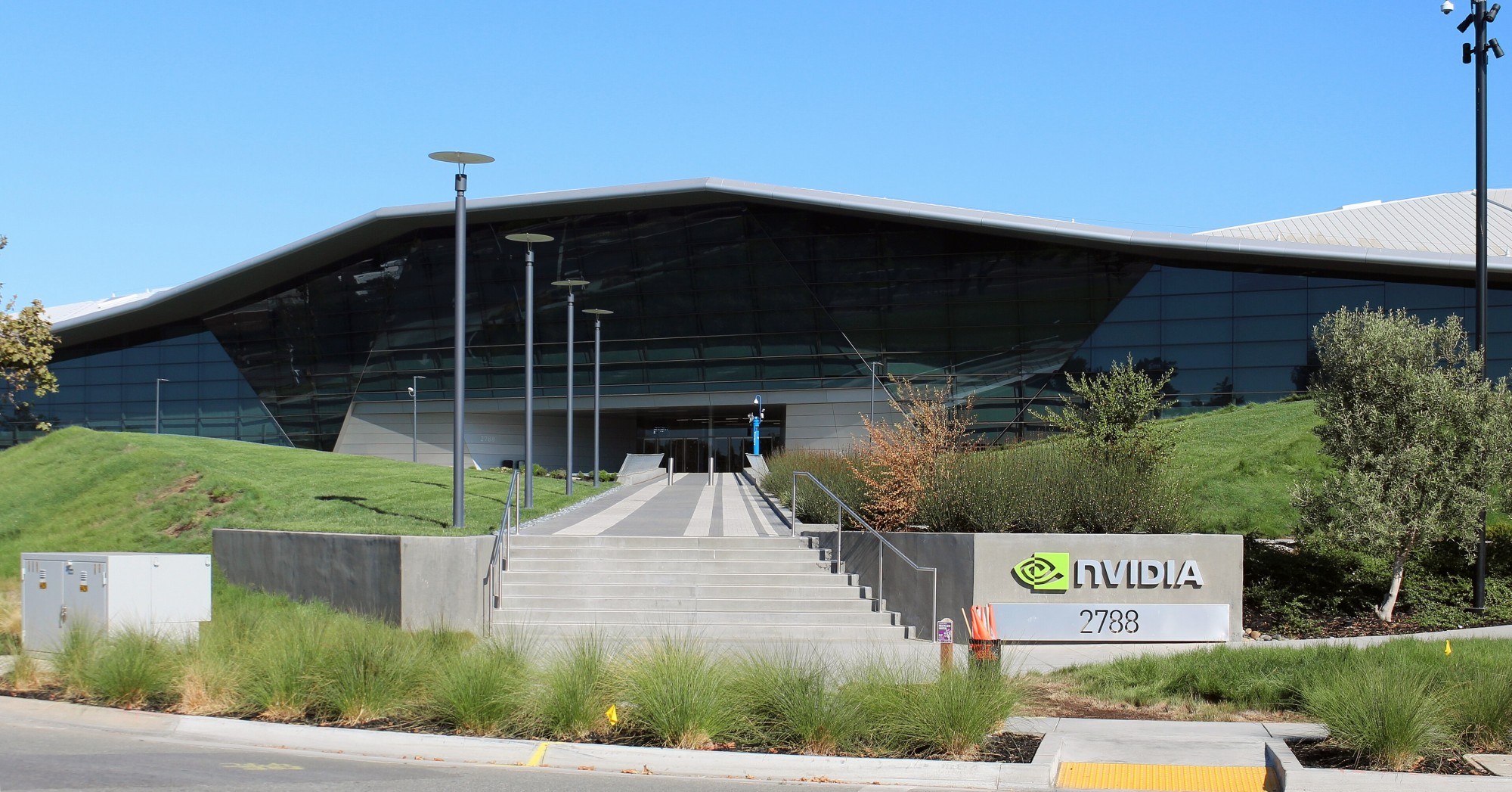
Top image: Nvidia’s headquarters at 2788 San Tomas Expressway in Santa Clara, the address on the House letter, photographed in 2018. Photo: Coolcaesar / CC BY-SA 4.0 via Wikimedia Commons
ANALYSIS | What the documents say
Today is the deadline. A Nov. 4 letter from three House Republican chairmen asked Nvidia founder and CEO Jensen Huang to either accept a Nov. 18 closed-door briefing or offer another date “by November 11, 2026.” As of Tuesday afternoon he had not answered, ABC News reported. Asked whether he would subpoena Huang if he did not respond, House Foreign Affairs Chairman Brian Mast, R-Fla., said “absolutely.”
The deadline is one of four separate tracks now converging on the world’s most valuable chipmaker, which is headquartered on San Tomas Expressway in Santa Clara. A board-commissioned investigation is underway, run by a former top federal prosecutor. A shareholder class action was filed Monday in federal court in San Jose. Wall Street is reassessing the company a week before its quarterly earnings. And in Washington, the White House is defending Huang while congressional Republicans press him for answers.
What the House letter asks
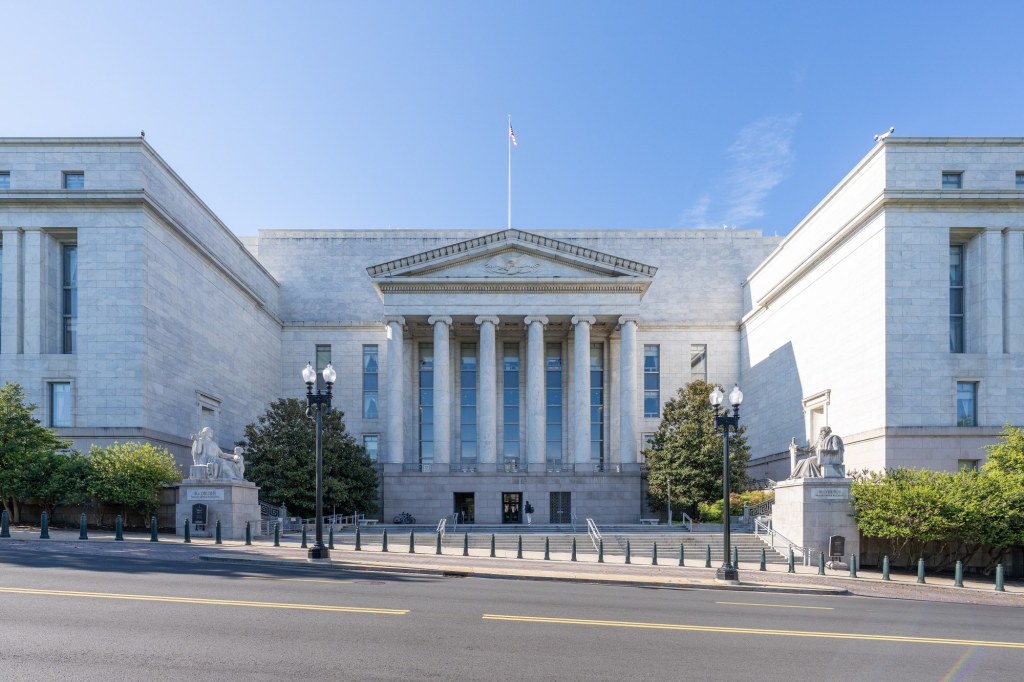
The two-page letter, addressed to Huang at 2788 San Tomas Expressway, is signed by Mast, Select Committee on the CCP Chairman John Moolenaar, R-Mich., and House Intelligence Committee Chairman Rick Crawford, R-Ark. It requests a “joint, closed-door briefing” in Room 2172 of the Rayburn House Office Building on Nov. 18. The subject is “NVIDIA’s security protocols against foreign adversary espionage and your interactions with a publicly reported People’s Republic of China (PRC) intelligence asset: Megaspeed executive Alice Huang.”
“The issue of PRC infiltration and access to cutting-edge U.S. technology is core to the investigative work of our three committees this Congress,” the chairmen wrote. “It is vital that Congress determines the extent to which U.S. national security has been placed at risk.” The request was announced by the Foreign Affairs Committee and the China select committee.
The letter is a request, not a subpoena, and it has a built-in expiration problem. Republicans lose their committee gavels when the new Congress convenes in January. ABC noted that any subpoena would likely lapse then, and Democrats would have to issue a new one. Mast told ABC he has a “lengthy” list of questions, including what correspondence Huang had with the Chinese government. He also took care to separate the company from the concern. “We thank God that Jensen is an American entrepreneur,” Mast said. “It’s an American tech company because they’re the best chips anywhere in the globe. But that being said, we don’t want China to access them.”
Concern is bipartisan. House Minority Leader Hakeem Jeffries told ABC there are “real concerns” and called for “a full briefing” on “what the implications are in terms of America’s national security.”
The White House: ‘an honorable guy’
President Donald Trump, who has relied on Huang as an influential adviser on artificial intelligence, has publicly backed him. “I think he’s an honorable guy. I think he probably has an excuse for it,” Trump told reporters on Sunday, Nov. 8, according to The Guardian. “I haven’t heard he’s done anything wrong.” Trump said Monday that he had spoken with Huang by phone. “He said he had absolutely no idea that the person in question was a spy,” Trump said, as reported by ABC. Trump also said the FBI is looking into the matter, The Guardian reported.
China’s government has called the allegations “baseless and purely slanderous smears against China,” according to ABC. Neither Alice Huang nor Megaspeed responded to ABC’s requests for comment.
What Nvidia has said
The company’s position is set out in two short board statements. On Sunday, Nov. 8, the board said it was “initiating an independent investigation in light of recent reporting that founder and CEO Jensen Huang has been the target of a foreign intelligence effort,” overseen by a committee of independent directors. The key sentence for investors: “While the Board has no reason to believe that either national security or NVIDIA secrets were compromised, the Board’s inquiry will examine all available information.” The board said it “has confidence in Jensen and his leadership team” and that Huang fully supports the review.
On Tuesday, Nov. 10, the independent directors said they had retained Joon H. Kim, the former acting U.S. attorney for the Southern District of New York, and his firm, Wachtell, Lipton, Rosen & Katz, to conduct “a thorough and independent investigation.” CNBC reported the hire the same day.
In a message to employees, first reported by Axios and later quoted in the shareholder complaint, Huang acknowledged a personal relationship and apologized. “There is no excuse for what I did. I am deeply sorry,” he wrote.
The Chronicle did not contact Nvidia for this article. The company’s positions above come from its published statements, and ABC reported that Nvidia had not publicly responded to the House request.
What the shareholder lawsuit alleges
The legal exposure is clearest in a 17-page complaint filed Nov. 9 in the U.S. District Court for the Northern District of California, Kistenmacher v. Nvidia Corp. and Jen-Hsun Huang, case No. 5:26-cv-13448. The Rosen Law Firm filed it on behalf of a proposed class of investors who bought Nvidia securities between Oct. 9, 2025, and Nov. 8, 2026. It alleges violations of Section 10(b) and Section 20(a) of the Securities Exchange Act and SEC Rule 10b-5, the standard claims in a stock-drop suit: that a company made materially misleading statements, that investors relied on them, and that the stock fell when the truth came out.
The complaint does not allege that chips were diverted or that secrets were lost. Its theory is narrower. It quotes three public statements and argues each was misleading because of the relationship the company had not disclosed:
- Oct. 9, 2025: Nvidia spokesman John Rizzo told The New York Times that Nvidia staff visiting Megaspeed had “found no evidence of diversion,” and that Megaspeed was “wholly owned and operated by a company based and headquartered outside China, with no China shareholders.”
- Oct. 29, 2026: Rizzo told the Times that “Jensen’s interactions with Ms. Huang are not unusual or unexpected. Meetings with customers are part of a C.E.O.’s job.”
- Oct. 30, 2026: Huang told Bloomberg that dealings with Megaspeed were “normal and not unusual,” adding: “We’ve studied all their deployments of our GPUs and counted every one.”
The complaint treats the Nov. 8 board statement as the moment “the truth begins to emerge.” It says Nvidia shares fell $7.97, or 4.27%, to close at $178.67 on Nov. 9. It asks for class certification, unspecified damages and a jury trial.
Early complaints like this one are allegations, not findings, and they are often filed within days of a stock drop. Under federal securities law, a court will later appoint a lead plaintiff and lead counsel, an amended complaint usually follows, and the company typically moves to dismiss. A central question will be whether statements about a customer relationship, made while the CEO’s personal involvement was not disclosed, were material to investors in a company of Nvidia’s size. Nvidia has not filed a response.
The market read
On Wednesday morning, Baird downgraded Nvidia to neutral from outperform and cut its price target to $200 from $500, CNBC reported. Baird is one of only a few firms among the 64 analysts tracked by LSEG to rate the stock hold or lower. Analyst Tristan Gerra said the rating would likely stay in place until the U.S. government decides how to respond. He predicted “a new ban on H200 exports to China” and estimated a possible write-down of about $5 billion on inventory he believes is waiting in Asia. He also cited uncertainty over whether Huang will remain CEO during the board’s review and the risk of slower AI capital spending by cloud providers. Gerra did not predict a further collapse. He said the stock “will at best stay in a trading range until the dust settles.”
The next hard data point comes soon. Nvidia has scheduled its third-quarter fiscal 2027 results call for Tuesday, Nov. 17, at 2 p.m. Pacific, the day before the requested briefing. It will be the first time analysts can question management since the board opened its review.
What to watch
- Wednesday, Nov. 11: Whether Huang accepts the Nov. 18 date, proposes another, or declines, and whether Mast follows through on a subpoena.
- Nov. 17: Nvidia’s earnings call, including any disclosure about the investigation, export-control exposure or China-bound inventory.
- Nov. 18: The requested closed-door briefing in Rayburn 2172.
- January: Democrats take the House gavels. Any Republican subpoena likely expires, and Democratic leaders have said they want a briefing of their own.
- The court docket: Lead-plaintiff motions, and whether other firms file similar suits.
The long view
Nvidia’s board has framed this as a governance problem to be investigated, not a security breach, and it said plainly that it has seen no evidence that secrets were compromised. The White House has stood by Huang. Congress, the plaintiffs’ bar and Wall Street are each testing that position in their own way: Congress through a briefing request, plaintiffs through a lawsuit, and analysts through their ratings. For Santa Clara, the stakes are concrete, because Nvidia is the anchor of the South Bay’s AI economy. How quickly the board’s review produces answers may matter to the region as much as what it finds.
Sources
- Letter from Chairmen Mast, Moolenaar and Crawford to Jensen Huang, Nov. 4, 2026 (PDF)
- House Foreign Affairs Committee press release, Nov. 4, 2026
- House Select Committee on the CCP press release
- Nvidia, “Statement From NVIDIA Board of Directors,” Nov. 8, 2026
- Nvidia, “Statement From the Independent Members of the NVIDIA Board,” Nov. 10, 2026
- Kistenmacher v. Nvidia Corp. et al., No. 5:26-cv-13448 (N.D. Cal.), complaint filed Nov. 9, 2026 (PDF)
- ABC News, “House Republicans consider issuing subpoena to Nvidia CEO Jensen Huang,” Nov. 10, 2026
- The Guardian, “Nvidia opens investigation after report CEO Jensen Huang was target of foreign intelligence,” Nov. 8, 2026
- The Guardian, Nvidia shareholder lawsuit and Trump comments, Nov. 10, 2026
- CNBC, Nvidia hires Wachtell Lipton to lead Huang probe, Nov. 10, 2026
- CNBC, “Baird downgrades Nvidia on CEO Huang worries, AI uncertainty,” Nov. 11, 2026
- Nvidia Investor Relations, third-quarter results conference call notice


Leave a Reply