
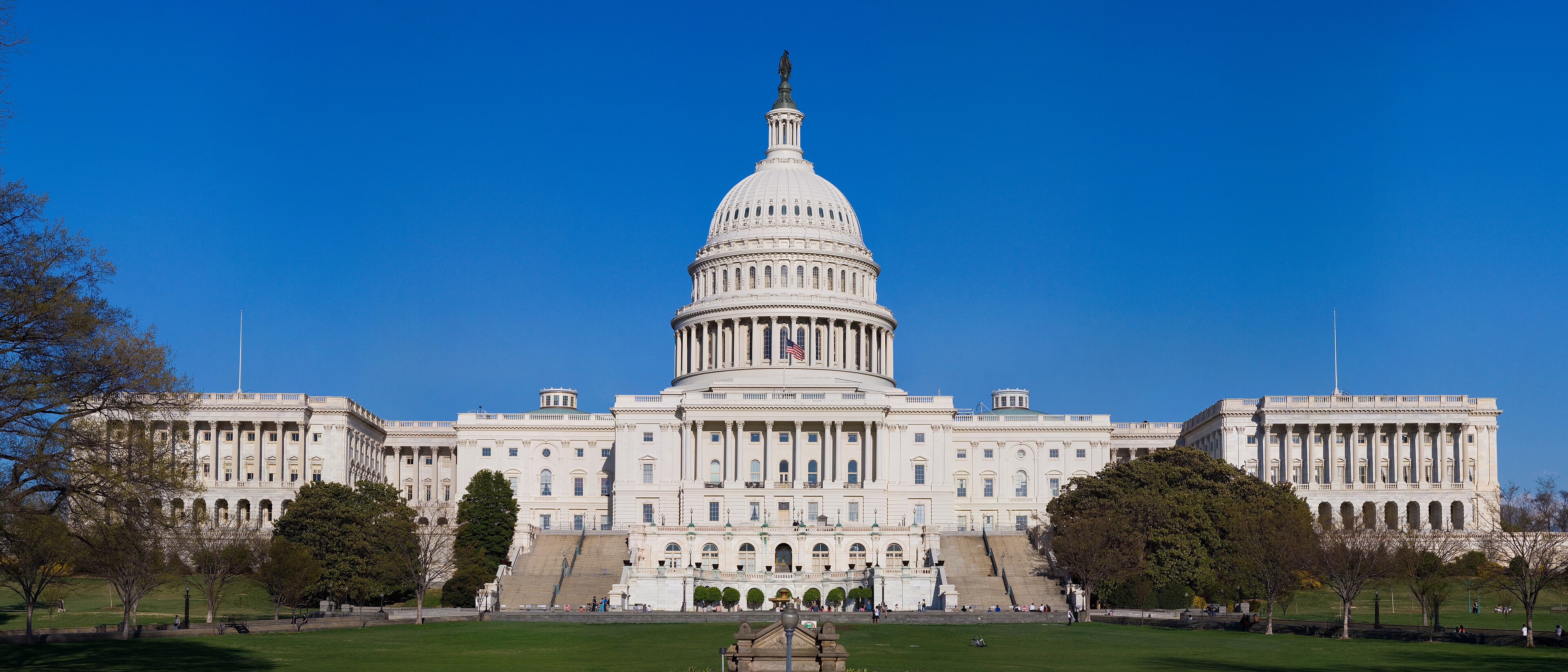
Top image: The U.S. Capitol. Four Silicon Valley House seats are on the Nov. 3 ballot. Photo: Noclip (public domain) via Wikimedia Commons
Follow the money in Silicon Valley this fall and it mostly leads away from Congress. The region’s tech donors are pouring money into state ballot measures, as the Chronicle has reported, and into city council races, including the 49ers’ spending in Santa Clara. The four House seats that cover Santa Clara and San Mateo counties look different.
Pre-general reports filed with the Federal Election Commission over the past 10 days, covering activity through Oct. 14, show four Democratic incumbents with clear financial advantages over Republican challengers who have raised little. The FEC’s independent-expenditure data, the record of what super PACs and other outside groups spend to support or oppose candidates, show almost no general-election activity in any of the four districts. In 2024, outside groups spent more than $5 million in a single Valley race.
What follows is drawn from the reports themselves, the FEC’s processed data and the Secretary of State’s certified candidate list. One caveat runs throughout: FEC data on outside spending can lag, and late independent expenditures reported on 24-hour notices may not yet be reflected. The figures below are what the public record showed as of this week.
The matchups
The Secretary of State’s certified list for Nov. 3 sets four Democrat-versus-Republican races:
- 15th District: Rep. Kevin Mullin (D) vs. Charles Hoelter (R).
- 16th District: Rep. Sam Liccardo (D) vs. Peter Sundin Soulé (R), listed on the ballot as an investor.
- 17th District: Rep. Ro Khanna (D) vs. Ritesh Tandon (R).
- 18th District: Rep. Zoe Lofgren (D) vs. Shane Lewis (R), listed as an electrical test engineer.
Under California’s top-two primary, a district can send two candidates of the same party to November. That is what happened in the 16th District in 2024, and it drew the outside money. This year, each Valley race is a two-party contest.
The numbers, district by district
All figures are from each committee’s pre-general report (FEC Form 3), and the totals are cycle-to-date, meaning since January 2025. Cash on hand is as of Oct. 14.
CA-17: Khanna. Ro Khanna for Congress reported $15.5 million in receipts this cycle, $14.4 million of it from individuals and $1,000 from PACs. The committee has spent $9.77 million and had $16.58 million in cash. That cash total is larger than the cycle’s receipts because the committee carried money over from previous cycles. During the first two weeks of October, it took in $84,314 and spent $442,389, ending the period about $358,000 below where it started. Khanna, who has told NPR he is “thinking seriously” about running for president and is widely seen as a likely contender for the 2028 Democratic presidential nomination, has spent part of the fall campaigning for other Democrats, including on a four-stop college tour, The Washington Post reported.
Tandon’s committee reported $57,011 in receipts this cycle, $51,784 in spending and $5,227 in cash.
CA-16: Liccardo. In his first re-election campaign, Liccardo’s committee reported $4.0 million in cycle receipts, including $1.67 million from individuals and $943,000 from PACs. It has spent $1.83 million and held $2.26 million in cash on Oct. 14. Its early-October activity was modest: $84,019 raised and $54,546 spent.
Soulé’s committee reported $4,272 in receipts, $147 in spending, $4,125 in cash and $3,500 in debts.
CA-18: Lofgren. Lofgren’s committee reported $2.02 million in cycle receipts, $1.26 million from individuals and $539,200 from PACs. Her committee has spent $1.70 million and had $602,361 in cash. It raised $30,776 and spent $142,170 in the first half of October.
Lewis’ committee reported $115,369 in receipts and $111,052 in spending, leaving $4,417 in cash. It also reported $61,789 in debts. Lewis has lent his campaign $62,748.
CA-15: Mullin. Mullin’s committee reported $988,521 in cycle receipts, more of it from PACs ($567,912) than from individuals ($417,997). It has spent $893,655 and had $191,601 in cash, the smallest balance of the four incumbents. Early-October receipts were $12,980.
The FEC lists Hoelter as a candidate under ID H6CA15194, but the Chronicle found no committee financial totals for him in FEC data.
The outside money that isn’t there
The more striking finding is what the FEC’s independent-expenditure data do not show. For the 2026 cycle, the FEC’s district pages for the 15th, 16th, 17th and 18th districts list mostly small primary-season items:
- In the 18th, Protect Progress reported about $109,274 supporting Lofgren, for direct mail in May.
- In the 17th, Viable PAC reported $37,500 opposing Khanna and $37,500 supporting his primary challenger Ethan Agarwal in late May.
- The rest is small: Sierra Club Independent Action, the South Bay AFL-CIO Labor Council, a voter-guide item and a few hundred dollars from other groups.
Compare 2024. In the open 16th District race to succeed Rep. Anna Eshoo, FEC data show Neighbors for Results spent $1.61 million supporting Liccardo and $346,261 opposing Assemblymember Evan Low. The Next Generation Veteran Fund spent $1.43 million supporting Peter Dixon. Groups backing Low included Equality PAC ($664,353), Equality California Votes ($444,450), Golden State Leadership Fund ($399,000) and Inclusion PAC ($327,987). CHC BOLD PAC spent $271,062 supporting Liccardo. Outside spending in the other three districts was far smaller in 2024 as well: Protect Progress spent $108,546 supporting Khanna, and Central Coast Values PAC spent $174,836 supporting Lofgren.
The explanation is mostly structural. Outside groups spend where control is in doubt, and in 2024 the 16th District was an open seat with two Democrats competing for it. In 2026, all four seats have incumbents, and each faces a Republican in districts that have consistently elected Democrats. FEC data do not record why groups choose not to spend, and the Chronicle is not attributing motives to any of them.
What the incumbents’ money is for
A large balance in a safe race is not unusual. Members of Congress use leftover campaign funds to transfer money to party committees, support other candidates or prepare for future races, within federal limits. Khanna’s $16.6 million is the largest in the region. The October activity, with more money going out than coming in, is consistent with a campaign spending in the final weeks. The Form 3 summary pages do not explain the spending, and the Chronicle has not reviewed the itemized disbursements in detail.
Liccardo’s position is different. He won a costly 2024 race with substantial super PAC support and now has $2.26 million on hand two weeks before his first re-election. Mullin’s balance is the smallest, and his heavier reliance on PAC money is a pattern worth tracking.
What the Republican side shows
Together, the four Republican challengers reported about $177,000 in cycle receipts, according to their pre-general reports and FEC data, less than 1% of what the four incumbents raised. The numbers do not say anything about the candidates’ arguments. They do show that Republican candidates in these districts are running with little money, and that national Republican groups have not reported independent spending here. That is a common pattern in districts both parties consider safe.
The long view
The ballot-measure and city-council fights this fall show that Silicon Valley money still goes where it can change outcomes. The House races show where it does not. Two years ago, outside groups spent more than $5 million in the 16th District because the outcome was in doubt. This year, the same seat is quiet. Watch three things after Nov. 3: whether the incumbents’ large balances move to party committees or other races, whether the 16th District stays quiet in 2028, and whether the next open Valley seat brings the 2024 pattern back.
Sources
- California Secretary of State, Certified List of Candidates, Nov. 3, 2026 General Election
- FEC pre-general reports (Form 3), filed Oct. 15-22, 2026: Ro Khanna for Congress; Liccardo; Mullin; Lofgren; Tandon; Lewis; Soulé
- FEC election pages, 2026: CA-15, CA-16, CA-17, CA-18
- FEC election pages, 2024: CA-16, CA-17, CA-18
- South Bay Chronicle, Building a Better California coverage, Oct. 23, 2026
- South Bay Chronicle, The 49ers’ $2.6 Million Bet on Santa Clara City Hall, Oct. 17, 2026


Leave a Reply