
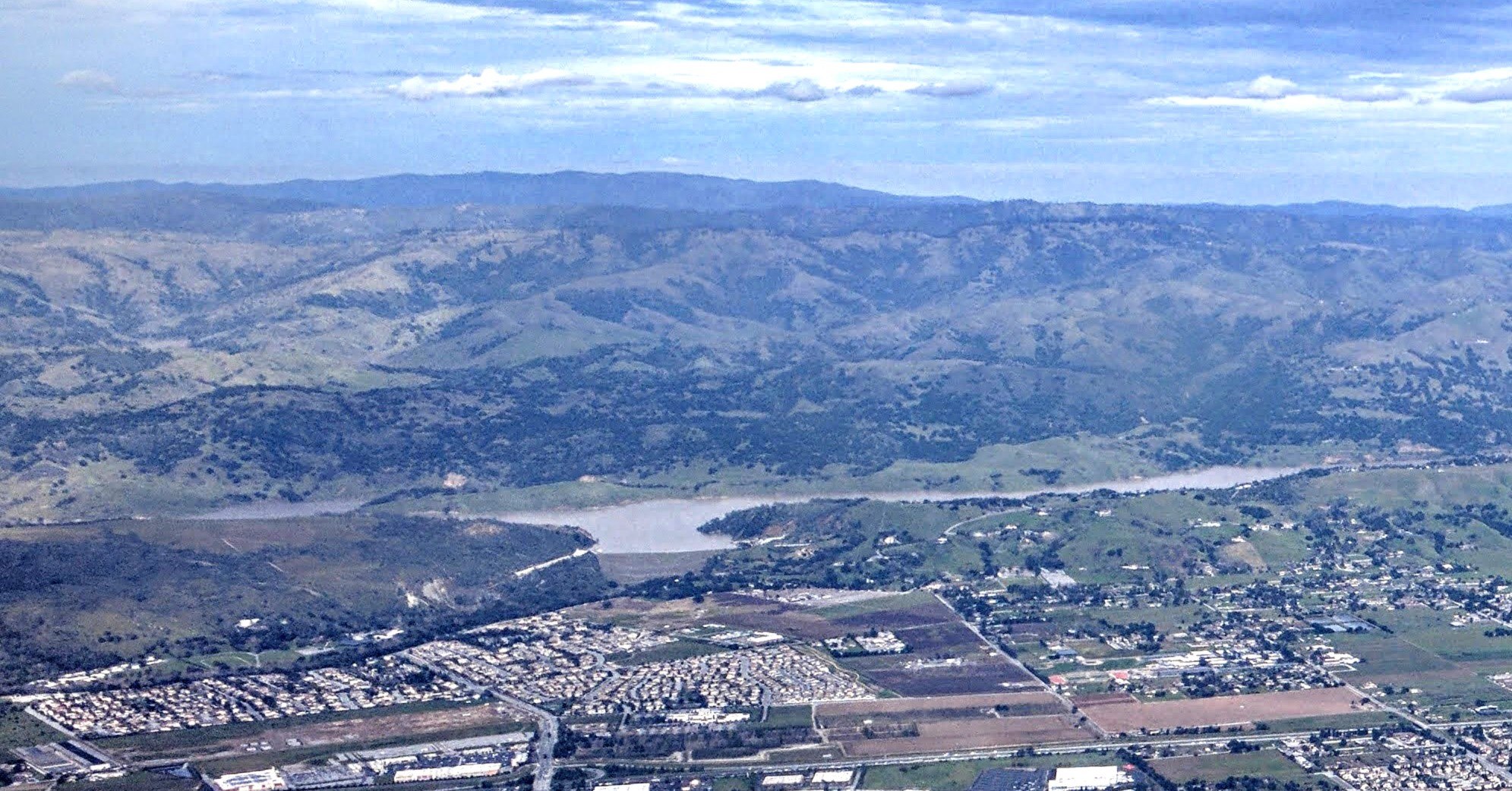
Top image: Anderson Dam in the Santa Clara County foothills, which Valley Water manages. Photo: Dicklyon / CC BY-SA 4.0 via Wikimedia Commons
San José’s City Council will vote Tuesday on a resolution proclaiming a local emergency “ahead of the forecast and potentially historic El Niño storm season,” according to a city staff memo on the council’s agenda for its Nov. 10 meeting (Legistar listing).
The memo recommends two actions: that the council accept a report requested at its Oct. 13 joint meeting with the Valley Water board, and that it adopt a resolution under Chapter 8.08 of the San José Municipal Code to proclaim a local emergency “to align with the Governor’s State of Emergency proclamation” and organize city resources.
What a local emergency does
The draft resolution says the purpose of such a proclamation is “to provide extraordinary police powers, immunity for emergency actions, authorize issuance of orders and regulations, and activate pre-established emergency provisions.” City staff’s presentation also says it helps the city acquire needed resources and signals the threat to other levels of government, according to the agenda summary.
The governor’s order and the forecast
Gov. Gavin Newsom proclaimed a statewide state of emergency on Sept. 21, directing agencies to stage supplies and equipment ahead of the season. His office cited federal forecasters’ outlook for a very strong El Niño this fall and winter.
What came out of the Oct. 13 joint meeting
San José Spotlight reported that city and Valley Water officials discussed about 140 miles of waterways in San José, where it is not always clear which agency is responsible for which stretch. Mayor Matt Mahan said the city should gather information on the highest-risk portions of waterways, and the council supported that direction.
Residents of the Coyote Creek corridor raised concerns about wood and debris blockages, the Spotlight reported, including a petition on a stretch between William Street and Interstate 280. Valley Water officials said the district would open free sandbag sites in November, and told residents to report problems they see. The Spotlight also reported that Anderson Dam has been drained to about 3% of capacity as part of its seismic retrofit.
What residents can do
The staff presentation notes that creeks without engineered levees can exceed their capacity, and that residents do not have to live beside a creek to be affected by flooding. It suggests that residents:
- check their address’s FEMA flood hazard designation and consider flood insurance;
- sign up for AlertSCC, the county’s emergency notification system;
- report debris or dumping in creeks to Valley Water at (408) 630-2378; and
- report street flooding to San José 311.

What to watch Tuesday
The meeting starts at 1:30 p.m. at City Hall. The memo’s attachments assess specific creeks, and the council could direct staff to follow up on the highest-risk reaches. The Chronicle reviewed the staff memo and agenda summary, not the full attachments, and will report what the council decides.




Leave a Reply