
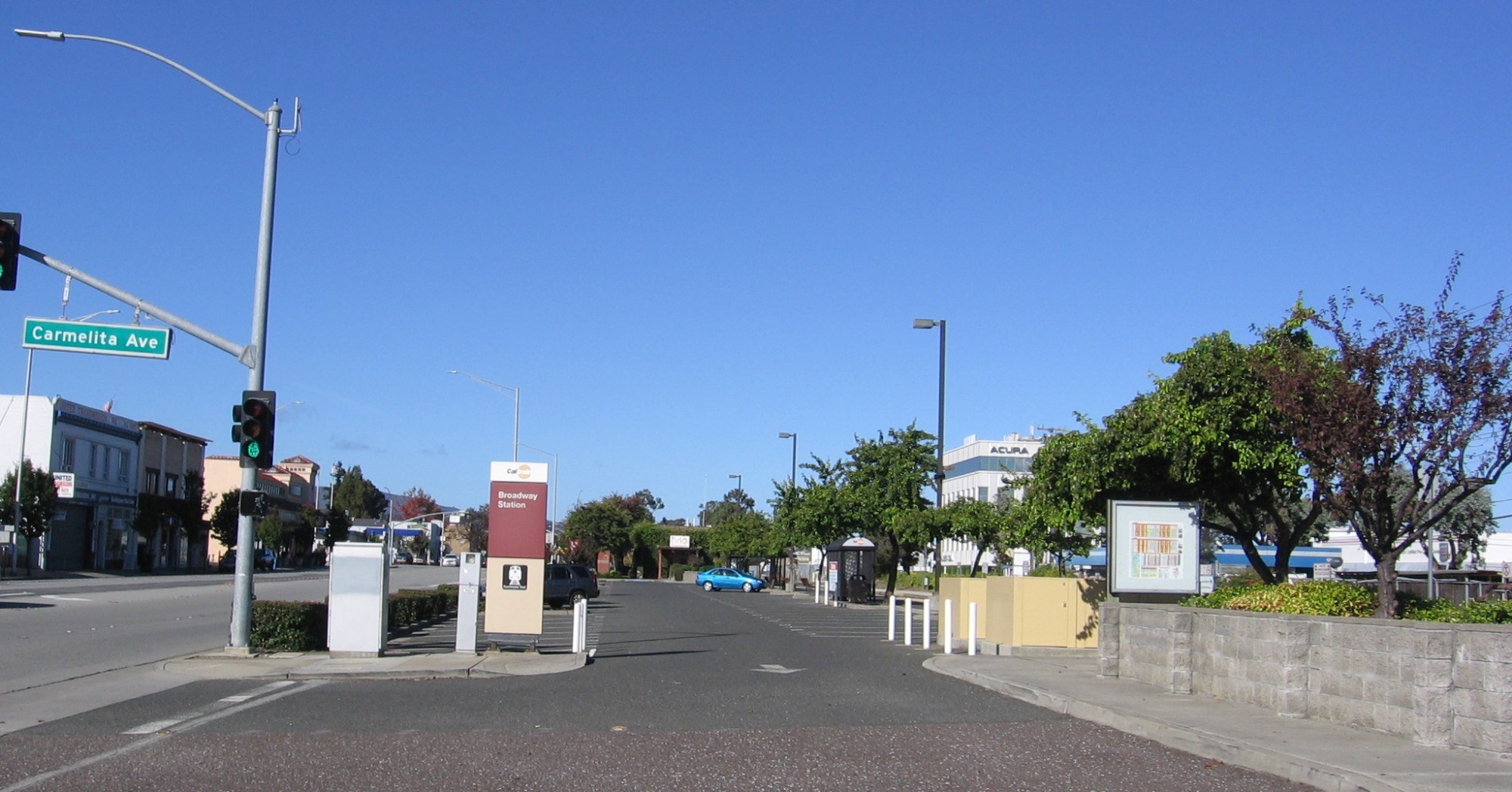
Top image: The area around Caltrain’s Broadway station in Burlingame, photographed in November 2012. The Broadway crossing is the California Public Utilities Commission’s top-ranked grade separation in the state. Photo: Pedro Xing / CC0 via Wikimedia Commons
ANALYSIS | What the documents behind three San Mateo County priorities show
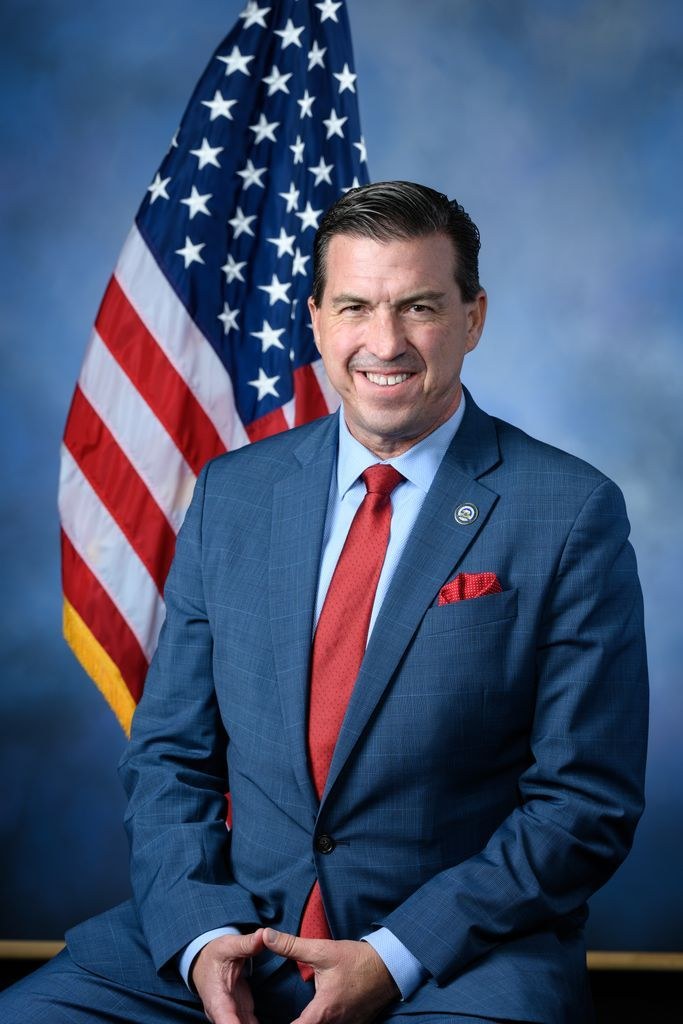
Rep. Kevin Mullin won a third term on Nov. 3, with 79.3% of the vote in the count as of the latest update in Associated Press results published by KQED, and he’ll return in January as a member of the House majority. In the meantime, the San Mateo County Democrat’s office has spent the past two months on three local fights where the federal government decides the outcome: a rail crossing in Burlingame, the cellphone alerts residents will depend on this winter, and the fate of the National Archives building in San Bruno.
The Chronicle read the primary documents behind each: the grant announcements, the text of Mullin’s two bills, and the National Archives’ Oct. 5 letter to him. Together they show a member who works mostly through appropriations, agency pressure and narrow, technical legislation rather than floor fights.
The Broadway money
The Federal Railroad Administration has awarded $90.4 million for construction of Caltrain’s Broadway Grade Separation in Burlingame through its Railroad Crossing Elimination Program, according to a Nov. 5 release from the San Mateo County Transportation Authority. The project will raise the tracks and lower the roadway. The California Public Utilities Commission ranks the crossing as the state’s top-priority grade separation, and more than 30,000 vehicles go through it each day.
Mullin’s release notes that the program was funded through the 2021 Bipartisan Infrastructure Law. It also says he secured $3 million for the project earlier this year through Community Project Funding in the appropriations process. “I have been partnering with Caltrain, the SMCTA and the City to bring home more federal support for the Broadway Burlingame Grade Separation project and am thrilled it has rightfully earned an additional $90 million grant from the Federal Railroad Administration,” he said. His release calls Broadway “the most dangerous rail crossing in all of California.”
The award came from the Trump administration’s Transportation Department, and the local partners credit it by name. The SMCTA release thanks “FRA Administrator David Fink, the U.S. Department of Transportation,” along with Sens. Alex Padilla and Adam Schiff and Mullin, “for their strong and longstanding support of the project.”
The larger story is local money. SMCTA has committed more than $380 million in voter-approved Measure A and Measure W funds, its largest single source. Together with state and city funding, that covers about 80% of the project’s cost, “a significantly larger share than is typical for major infrastructure projects,” the agency said. Burlingame Mayor Michael Brownrigg credited “hard work, sharp pencils, and leaders who focus on the long term.”
The documents disagree on timing. The partners’ release says site preparation and utility relocation will begin in May 2027 and construction will be complete in January 2032. Engineering News-Record, reviewing the federal selections, reported that Caltrain completed 65% design in June and says main construction could begin as early as November 2028 if it secures the remaining funding. ENR put the project at about $662 million. Urbanize SF cited estimates of $615 million for a 2026 start and $653 million for 2028. ENR also found that only 37 of the 91 crossing projects in the $1.24 billion round include construction. Broadway is one of them.
The same round sent up to $15.5 million to Sunnyvale to finish designing the Mary Avenue crossing, San Mateo County News reported. The two awards bring more than $100 million to the Caltrain corridor.
The READI Act: rules for the alert on your phone
On Oct. 30, Mullin introduced the Reliable Emergency Alert Delivery Integrity Act, or READI Act, at a San Mateo County press conference on El Niño storm risk. The bill text posted by his office doesn’t yet show a bill number. It would direct the Federal Communications Commission, within 18 months of enactment, to write regulations setting metrics, goals and minimum requirements for Wireless Emergency Alerts.
The bill defines three measures. Speed is the time between a carrier receiving an alert and the alert appearing on a phone. Reliability is the share of people inside the target area who accurately receive it. Overshoot is the share of recipients who are outside the target area. The minimum standards could be no weaker than the performance shown in the FCC’s most recent alert test. Carriers would have to report delivery data at least once a year, and the FCC would have to publish each year whether they are meeting the standards.
Two provisions stand out. Within 180 days, the FCC would study whether “advanced translation technologies” can produce accurate multilingual alerts, and it would run a pilot program if the results are positive. And one year after enactment, a phone would have to show a plain-language warning, with a link to a federal website, before a user turns off a class of alerts. The user would then have to confirm the choice. Violations would be enforced under the Communications Act of 1934.
The release makes the case with recent failures. It cites a Los Angeles wildfire evacuation warning meant for a few neighborhoods that “inadvertently went to 10 million residents,” and says more than 1 in 6 Americans has turned off at least one type of alert. “In California, we know all too well that seconds count during a crisis,” Mullin said. The bill would send its reports to the House Energy and Commerce Committee, where Mullin sits on the Commerce, Manufacturing and Trade; Energy; and Oversight and Investigations subcommittees, according to his committee page. With El Niño prompting emergency planning across the region, including San Jose’s proposed local emergency, the bill fits a regional priority.
San Bruno’s archives: the agency’s case and Mullin’s
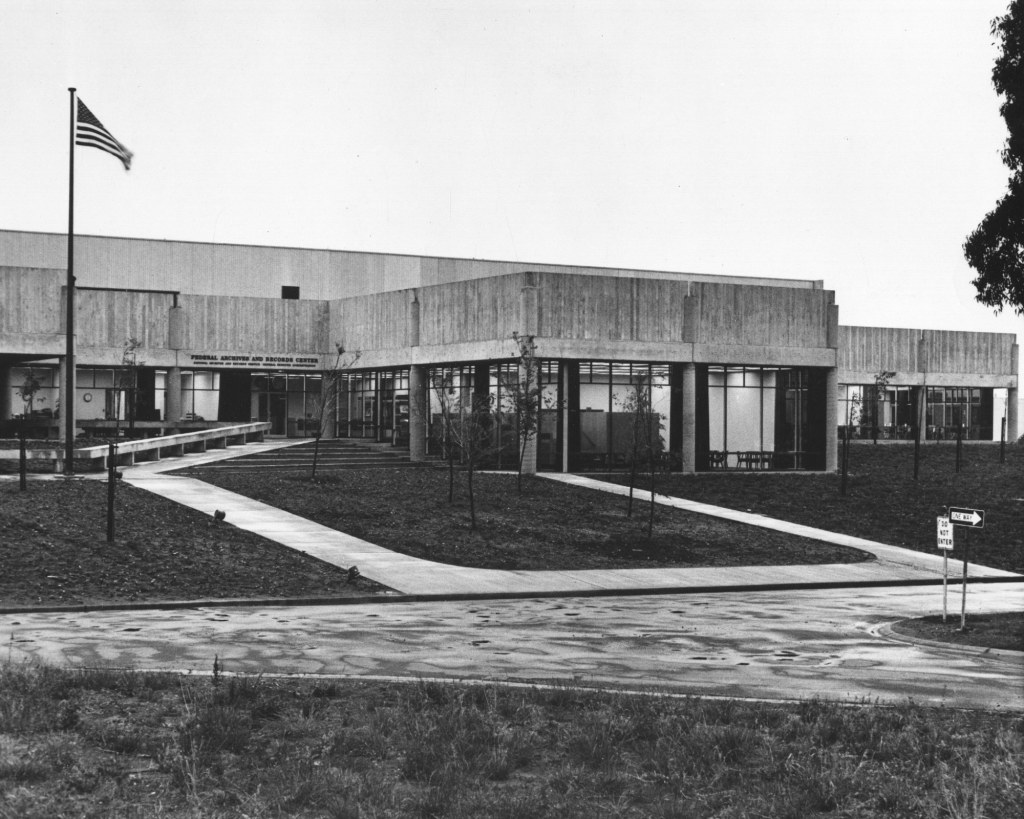
In June 2026, the National Archives and Records Administration announced it would close its San Francisco facility in San Bruno and its Chicago facility, two of 13 regional archives, according to Mullin’s office. The San Bruno site holds Angel Island immigration files, Chinese Exclusion Act and Japanese American incarceration records, and tribal histories.
NARA’s position, set out in an Oct. 5 letter to Mullin from Chief Operating Officer Jay Trainer, is that the move is a response to the federal shift to digital records. The agency stopped accepting paper transfers into its records-center program on June 30, 2024, under Office of Management and Budget memo M-23-07, and has completed five closures since 2022. The San Bruno building, owned by the General Services Administration, is “one of the oldest and most expensive in our portfolio and its storage footprint is underutilized,” Trainer wrote. Vacating it will save “in excess of $4.7 million annually.” NARA plans to move the immigration records to Kansas City, where it runs five facilities and where U.S. Citizenship and Immigration Services has consolidated its own files. It says off-site written requests for the San Francisco holdings are already four times on-site visits, and that a two-to-three-year move will protect the records. It declined to discuss staffing while bargaining with AFGE Council 260 continues.
Mullin’s office called that reply “dismissive.” His answer is the National Archives Protection Act, a two-page bill amending Title 44. It would bar the Archivist from closing, or “impos[ing] unreasonable restrictions on public access to,” any records center or archive facility that exists at enactment, or from renovating one in a way that moves records out for more than 180 days. As written, the bill would protect every existing facility, not only San Bruno. On Oct. 14, after Attorney General Rob Bonta sued to block the closure, Mullin said NARA “failed to conduct any kind of public input process” and pledged to fight it “through other means like the federal budget process.” “These archives aren’t just boxes of paper,” he said.
The politics
Mullin’s Nov. 4 statement was sharper than his legislation. He said “Trump and Republicans’ destructive policies have caused immense pain” and promised to “hold the Trump Administration accountable.” The documents show a more pragmatic working relationship. The Trump administration’s FRA delivered the Broadway money, and on the archives, Mullin is relying on a bipartisan coalition he describes as nationwide. As the Chronicle reported in October, he has also joined Bay Area colleagues in repeated oversight visits to the CBP holding area at SFO, and he was part of the delegation that won reelection by wide margins on Nov. 3, as we reported Sunday.
The long view
In a Democratic House, Mullin’s leverage grows in exactly the places these documents point to: appropriations language that can fence off a facility’s budget, Energy and Commerce oversight of the FCC, and a Democratic-run committee that can move his alert rules. The archive fight tests whether Congress will let agencies shrink their physical footprint as records go digital. NARA’s savings case is concrete, and so is San Bruno’s place in Pacific Coast family histories. Broadway shows the model he prefers, with local voters paying most of the bill and federal dollars closing the gap. Dates to watch: Caltrain’s push to 95% design and a guaranteed maximum price; a bill number and cosponsors for the READI Act; and the court schedule in Bonta’s archives suit.
Sources
- San Mateo County Transportation Authority, FRA awards $90.4 million for Broadway Grade Separation, Nov. 5, 2026
- Office of Rep. Kevin Mullin, grant release, Nov. 5, 2026
- Engineering News-Record, $1.2B rail crossing funding package analysis, Nov. 2, 2026
- Urbanize SF, Broadway grade separation award
- San Mateo County News, Caltrain construction funding, Nov. 9, 2026
- READI Act of 2026, bill text and release, Oct. 30, 2026
- NARA letter to Rep. Mullin from COO Jay Trainer, Oct. 5, 2026
- National Archives Protection Act, bill text
- Mullin statement on the California attorney general’s lawsuit, Oct. 14, 2026
- Mullin statement on the House majority, Nov. 4, 2026
- KQED/Associated Press election results



Leave a Reply