
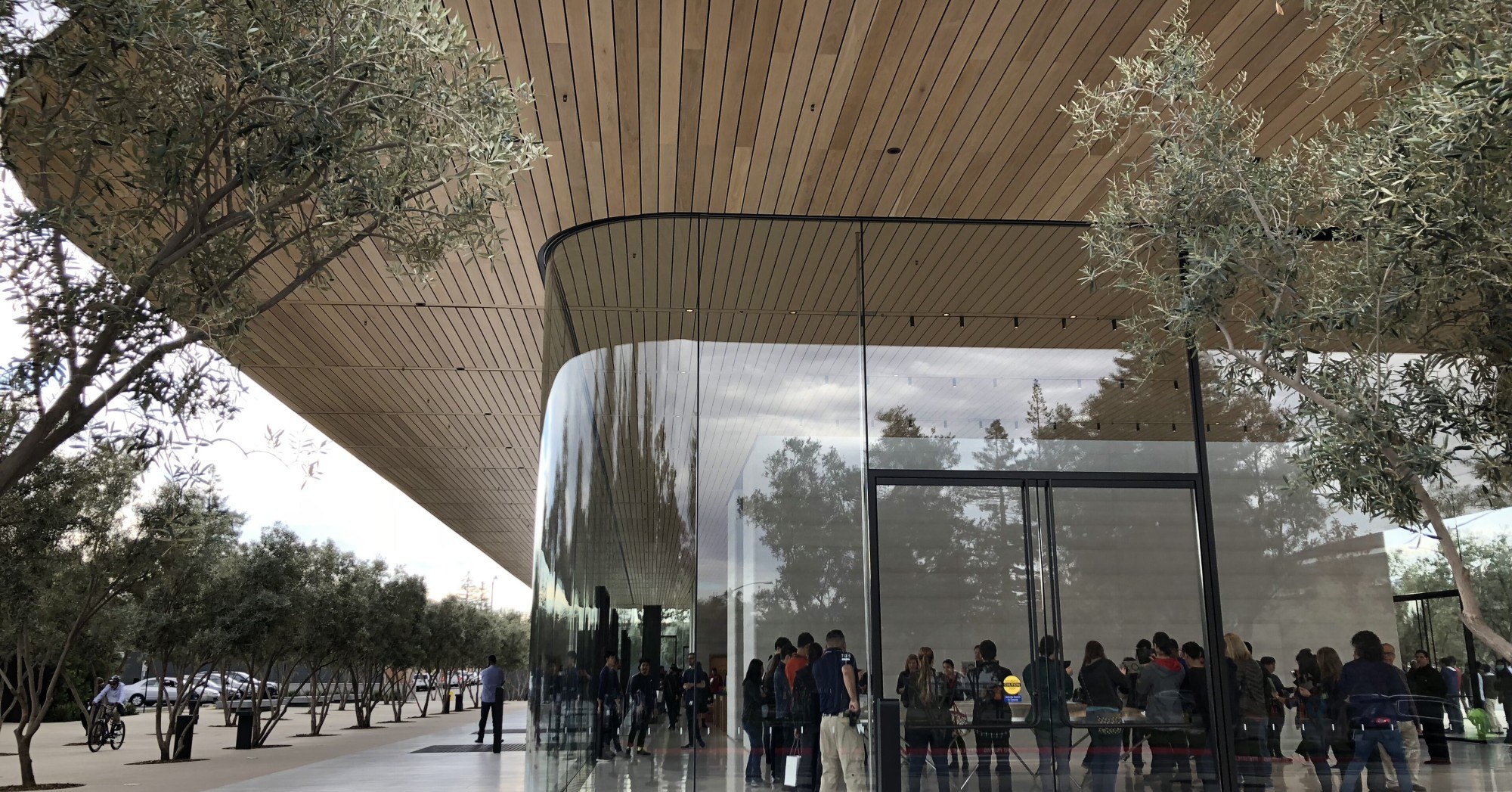
Top image: The Apple Park Visitor Center on North Tantau Avenue in Cupertino, photographed in November 2017. Photo: Ez7b4q / CC BY-SA 4.0 via Wikimedia Commons
Apple reported $114.5 billion in September-quarter revenue on Monday, up 12% from a year earlier, in the first results since John Ternus became chief executive on Sept. 1. Diluted earnings were $2.10 a share, up 14%. That figure includes 5 cents from tariff refunds, according to the company’s press release. Both numbers beat Wall Street. Analysts polled by LSEG expected $113.39 billion and $1.99 a share, CNBC reported.
The stock still slid about 3% in extended trading. The reason was the forecast. Apple guided December-quarter gross margin to 45% to 46%, below the 46.3% analysts expected, as memory chips get more expensive.
The scorecard
Line by line, from Apple’s release, the earnings call and LSEG estimates via CNBC:
- iPhone: $57.6 billion, up 17%, against a $56.54 billion estimate. The quarter included only eight days of iPhone 18 Pro sales, per CNBC. The new iPhone Duo foldable went on sale after the quarter closed.
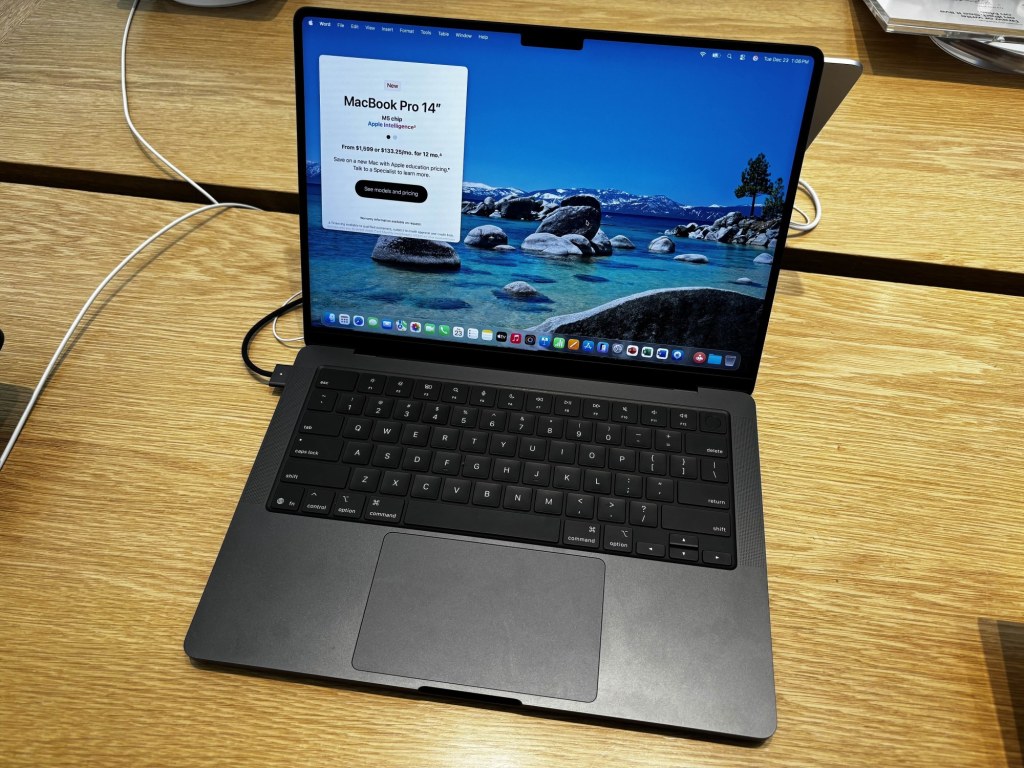
- Mac: $10.8 billion, up 24%. That was more than $1 billion above the $9.61 billion estimate.
- Services: $31.6 billion, up 10%, an all-time record. CNBC noted it was the segment’s slowest growth since 2022.
- iPad: $6.2 billion, down 10%, short of the $6.7 billion estimate. Apple blamed supply constraints and a tough comparison with last year.
- Wearables, Home and Accessories: $8.3 billion, down 8%. Analysts expected $9.06 billion.
- Greater China: up 21%, to about $17.5 billion.
- Net income: $30.7 billion.
Ternus called it the capstone of “our best fiscal year ever” in the release. “I think at this point, with everything we’ve achieved, it just feels like we’ve never been more confident that the best is yet to come,” he told CNBC.

The memory problem
The tension in the quarter was below the revenue line. Gross margin was 47.9%, and tariff refunds added about 1 percentage point of that, Apple said. Last quarter’s margin was 50.1%, CNBC noted. “What we’re seeing with memory pricing right now is unprecedented,” Ternus said on the call.
Apple is responding on three fronts, executives said:
- Prices. Chief Financial Officer Kevan Parekh said Apple “did reluctantly make the decision to change pricing,” starting with iPad and Mac in June and iPhone in September. CNBC reported iPhone prices rose $100.
- Parts. Parekh said Apple is pursuing lower-cost and non-memory components.
- Commitments. Ternus said manufacturing purchase obligations rose by $33 billion from the June quarter to the September quarter, a figure he said would appear in the annual report Apple files Tuesday. Chief Operating Officer Sabih Khan repeated the number.
Operating expenses rose 21% to $19.2 billion, which Apple attributed mainly to artificial-intelligence research and development. The December margin guide also carries some cost of ramping Siri AI, Parekh said. Apple’s AI spending is still modest by megacap standards, though. Capital spending was $2.24 billion for the quarter, CNBC reported, below the $3.33 billion LSEG estimate.
The foldable bottleneck
The forecast is a supply story as much as a demand story. Apple expects December-quarter revenue to grow 7% to 10%, ahead of the 6.1% analysts expected. Parekh called that range “our best view of constrained supply” and said he expects it to be “the best quarter for revenue in the history of the company.”
“iPhone Duo is constrained as of today,” Khan told analysts. He said the ramp is going well but that it is “really hard” to predict when supply will meet demand. CNBC reported that first-day preorders slipped to estimated ship dates in 2027. It also cited reports that some Duo screens can crack in normal use. Apple has said that problem affects a “small number” of devices.
What it means here
Apple is still the South Bay’s anchor tenant, and the call put a number on its domestic footprint. Management said nearly 100 components in the newest iPhones come from American companies, supporting more than 450,000 U.S. jobs, according to the call summary. The $33 billion jump in purchase commitments matters along the whole supply chain. It shows Apple is paying up front to lock in parts, which suppliers will feel long before consumers do.
The board declared a dividend of 27 cents a share, payable Nov. 16 to shareholders of record on Nov. 12, according to the release. Apple returned $28 billion to shareholders in the quarter, $24 billion of it through buybacks.
The long view
On Monday, we laid out the questions Ternus faced going into this call. Our October profile traced his rise through Apple’s hardware engineering ranks. His first report looked like that background: the newest hardware, a touchscreen Mac and a foldable iPhone, carried the quarter. The open question is cost. If memory pricing stays where Ternus says it is, Apple’s growth will depend less on demand than on how much it pays for chips and how many Duos it can build. Two dates matter next: the 10-K filing, with its fuller risk disclosures, and Apple’s next quarterly report, which will cover the holiday quarter.
Sources
- Apple Newsroom, “Apple reports fourth quarter results,” Nov. 2, 2026
- Apple Q4 fiscal 2026 earnings call transcript, via The Motley Fool, Nov. 2, 2026
- CNBC, Apple Q4 2026 earnings live updates and LSEG estimates, Nov. 2, 2026
- South Bay Chronicle, Nov. 2, 2026 preview
- South Bay Chronicle, Oct. 24, 2026 profile of John Ternus




Leave a Reply