
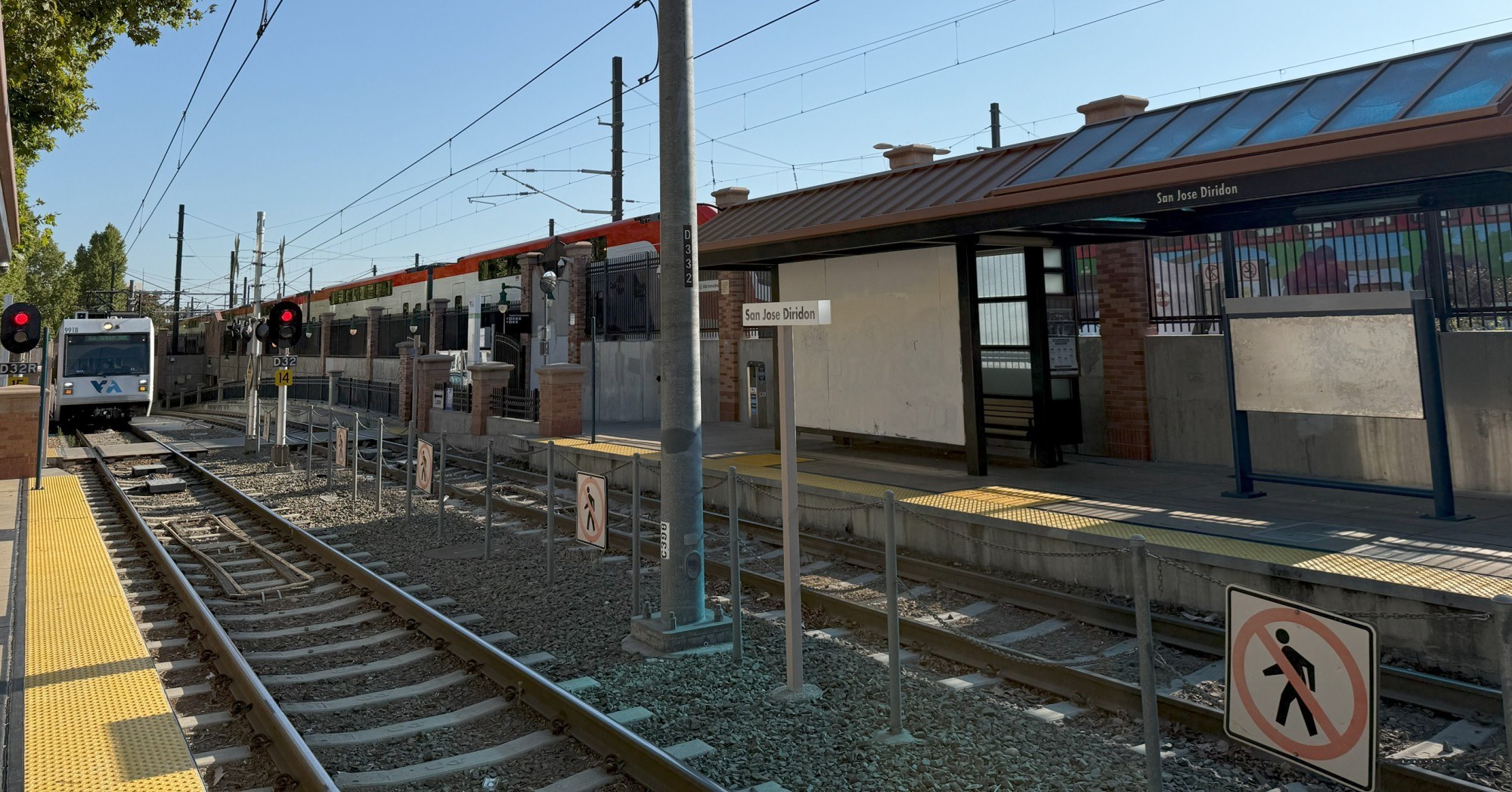
Top image: A VTA light rail train at San Jose Diridon station, with Caltrain equipment behind it. Measure RTM would fund both agencies. Photo: SaarPro / CC0 via Wikimedia Commons
The largest dollar question on Santa Clara County ballots today is Measure RTM, the regional transit sales tax. It would add half a cent to every taxable dollar spent in the county for 14 years, starting April 1, 2027, San José Spotlight reported. City of San José staff estimate it would raise about $313 million a year inside the county, in 2026 dollars, according to a city memorandum. It passes with a simple majority.
Below RTM on the ballot, voters in four cities are deciding new local taxes worth up to about $24.5 million a year combined, according to each city’s fiscal estimate. Cupertino and Los Altos voters are deciding whether to require citywide votes before certain land-use changes. San Jose’s Districts 5, 7 and 9 are electing council members in runoffs.
Polls and drop boxes close at 8 p.m. Santa Clara County’s first results, mostly early mail ballots, are expected at about 8:05 p.m., as we reported Monday.
Turnout going in
The county Registrar of Voters’ new elections dashboard showed turnout of 28.18% on Monday morning, up from 21.6% on Oct. 30, the Los Gatan reported. The registrar projects final turnout of 55% to 65%, which it says is in line with comparable general elections. A registrar spokesperson told an NBC affiliate the office was receiving about 22,000 ballots a day, according to KYMA. The registrar’s office urged voters not to mail ballots this close to the election because the Postal Service cannot guarantee same-day postmarking. Registrar Matt Moreles recommended a drop box or vote center instead.
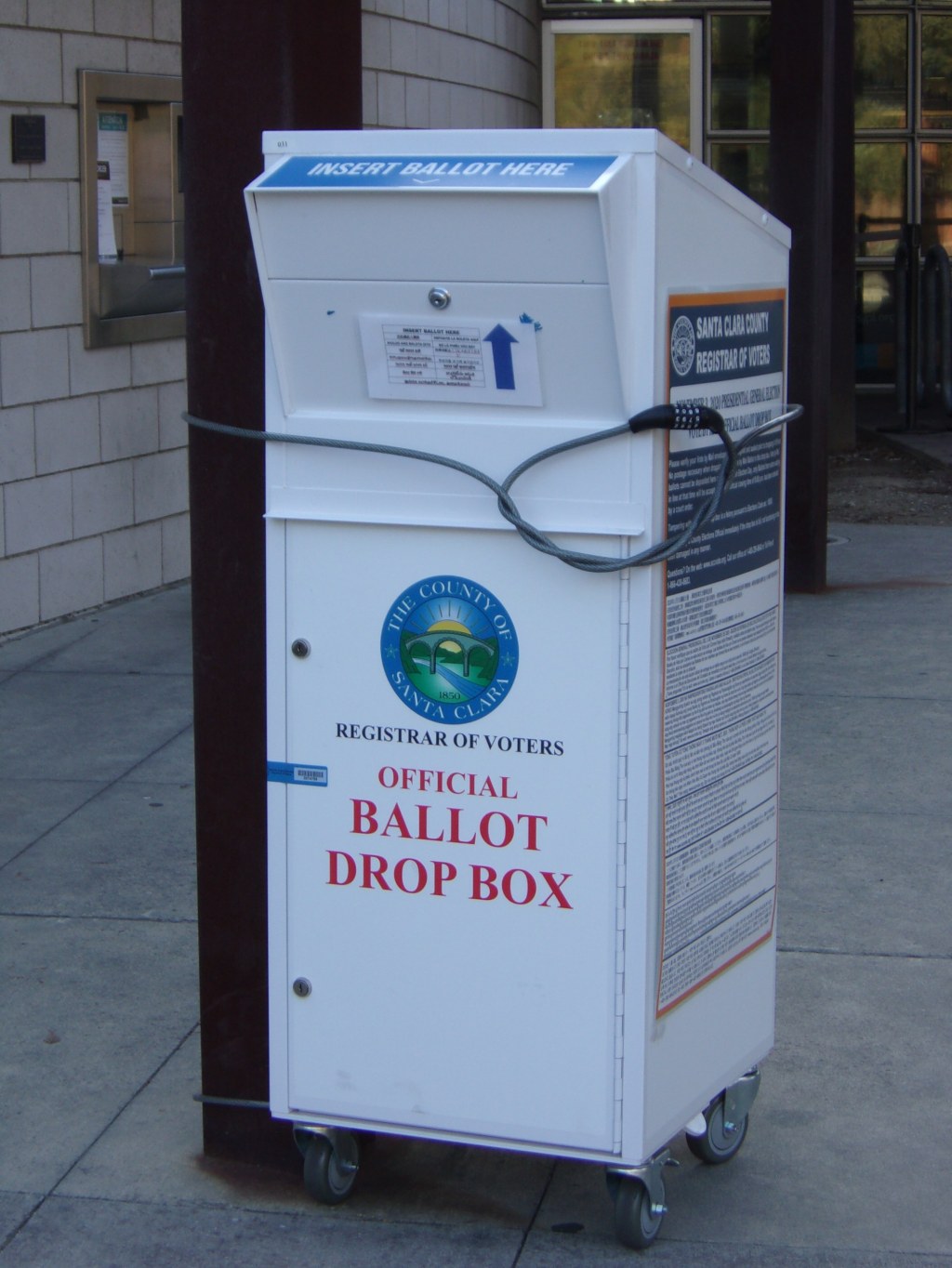
The county has 110 vote centers and 111 drop boxes. Where and how to vote is in our Sunday guide.
Measure RTM: where the money goes
Senate Bill 63, the Connect Bay Area Act, authorized the measure in 2025. It covers five counties: a 0.5% tax in Alameda, Contra Costa, San Mateo and Santa Clara, and 1% in San Francisco. The Metropolitan Transportation Commission estimates about $980 million a year regionwide, according to its fact sheet.
Inside Santa Clara County, state law fixes the split. Per the San José memo:
- 84.37%, about $264 million a year, to the Santa Clara Valley Transportation Authority (VTA) for transit and for repaving roads served by fixed-route transit.
- 10.38%, about $32.5 million, to Caltrain for operations and capital.
- 5%, about $15.7 million, to the regional Transit Transformation Action Plan.
- 0.25%, about $783,500, for administration.
The commission’s fact sheet uses a lower VTA figure, $245 million. That is a fiscal 2028 estimate net of state fees, not a contradiction. The county’s impartial analysis, as summarized by California Choices, says the tax would not count toward the state cap on combined local sales tax rates.
The measure includes oversight. Under SB 63, BART, Muni, AC Transit and Caltrain must undergo financial efficiency reviews, and the commission may withhold money from operators that don’t comply. An independent committee would check that revenue is distributed as the law requires.
The case for. The campaign says Caltrain could close stations, cut frequency and end late-night and weekend service, and that BART could close 15 stations and cut service by 70%. Caltrain expects a $75 million deficit in the fiscal year starting next July, and BART a $370 million gap, per San José Spotlight. Caltrain’s plan for a loss would cut peak weekday trains from every 15 minutes to hourly, end service at 9 p.m., close more than a third of stations and end weekend service. We reported on that plan in October. VTA is in better shape. “While VTA is financially stable now, your transit service would not get better if the measure doesn’t pass,” board chair and Campbell Councilmember Sergio Lopez told the Spotlight.
The case against. Opponents call RTM a “$14 billion-dollar bailout for a broken system” with “toothless” oversight, according to their argument as summarized by California Choices. They say ridership at the major agencies has fallen 51% since 2019 while expenses rose 28%. They also say the tax would push the county’s sales tax rate above 10%, and they want “Fixes Before Funding.”
Four city tax measures
All four go into the city’s general fund and need a simple majority. Revenue figures are each city’s estimate, as summarized by California Choices.
- Palo Alto, Measure J: a half-cent sales tax raising about $15.6 million a year until voters end it. It would take effect in April 2027. In June, the council adopted advisory guidelines to use the money to buy seven acres of the Cubberley Community Center from the Palo Alto Unified School District and to modernize the site. Opponents argue the real purpose is a $65.5 million land payment to the district. Our October explainer has the background.
- Mountain View, Measure F: would let the council raise the hotel tax from 10%, a rate unchanged since 1991, to as much as 15%. The city’s fiscal summary says it would bring in “up to $5,200,000 annually.” The impartial analysis estimates about $1.1 million per percentage point, which would be roughly $5.5 million at the cap. No opposition argument was filed.
- Gilroy, Measure B: would raise the hotel tax from 9% to 11% at first, about $700,000 a year. The council could later go up to 13% without another vote. Opponents call it “a huge, 31% tax hike.”
- Milpitas, Measure K: would replace a 1976 business tax based on employee counts with a flat fee of $25 to $400 a year. Businesses with gross receipts above $700,000 would also pay 0.025% to 0.035% on the upper tiers. It would raise about $3 million a year.
Votes on future votes
Two measures would require citywide elections before certain land-use changes.
- Cupertino, Measure L: would require approval from two-thirds of voters before parks or open space could be rezoned or developed for residential, commercial or industrial use. No opposition argument was filed. Its fiscal impact statement says it is likely to bring future election costs.
- Los Altos, Measure D: would bar the city from selling, leasing or declaring surplus its 10 downtown parking plazas. Changes that reduce parking or protected trees would need a majority vote, though two plazas could still become affordable housing without one. Opponents warn of “years of expensive unintended consequences.” The impartial analysis says the measure is not likely to affect city spending, but any legal disputes would be paid from the general fund.
Charter housekeeping
Several measures change how city halls work, mostly without organized opposition:
- Santa Clara, Measure C: raises the council-approval threshold for public works contracts from $1,000, a 1952 figure, to $250,000. It also allows “best value” methods such as design-build.
- Mountain View, Measure E: gives the council 60 days instead of 30 to fill a vacancy and ends required readings of ordinances.
- Morgan Hill, Measure A: makes the elected treasurer an appointee of the city manager when the current term ends in 2028. The city estimates savings of about $40,000 a year.
- Sunnyvale: three charter amendments, Measures G, H and I. They cover public works contracts, the city manager’s authority to settle claims, and letting appointed incumbents serve until a successor is elected.
San Jose’s three runoffs
San Jose has no city measures on this ballot. Three council seats are in runoffs, per the City Clerk. Primary results below are from the Bay Area Brief, which cites Ballotpedia and San José Spotlight:
- District 5: Councilmember Peter Ortiz (44.9% in June) against former Councilmember and Assemblymember Nora Campos (20.2%).
- District 7: Councilmember Bien Doan (47.9%) against East Side Union High School District trustee Van Le (22.4%).
- District 9: an open seat, with Vice Mayor Pam Foley terming out in December. Genny Altwer (35.5%) is endorsed by Mayor Matt Mahan, Rep. Sam Liccardo and Foley. Gordon Chester (22.2%), a longtime city Public Works employee, has labor backing.
The Brief, citing the Spotlight, says the results could shift the balance between the council’s labor-backed and business-backed blocs. Districts 1 and 3 were uncontested.
On the Peninsula
San Mateo County voters face their own measures, which we covered before today: Redwood City’s Measure E on rent control, San Bruno’s Measure S on its height limit, and the $848 million Measure V community college bond.
How to read tonight’s numbers
The first release is mostly early mail ballots. California accepts mail ballots postmarked by today that arrive by Nov. 10, and provisional ballots are counted later. Early margins in close local races can move for days. For RTM, Santa Clara County’s tally is only part of the result. The regional measure is decided by voters across all five counties.
The long view
RTM would fund transit across five counties for 14 years. In Santa Clara County, most of the money would stay local through VTA. Caltrain’s share is part of what decides whether the Peninsula rail line keeps weekend service. The city measures show a different pattern. Palo Alto, Mountain View, Gilroy and Milpitas are asking voters for general-fund money, and three of the four are taxes paid mainly by visitors or businesses rather than residents at the register. Cupertino and Los Altos show the opposite instinct: voters are being asked to take some land-use decisions away from their councils altogether. All three trends will show up in council budgets and housing plans in 2027.
What happens next
- Tonight: first Santa Clara County results at about 8:05 p.m.
- Nov. 10: last day for postmarked mail ballots to arrive.
- Dec. 3: San Mateo County certifies its results.
- Dec. 11: the Secretary of State certifies statewide results.
- April 1, 2027: the start date for Measure RTM if it passes. April 2027 is also when Palo Alto’s Measure J would take effect.
Sources
- City of San José, memorandum on VTA local investment priorities under SB 63 (Legistar)
- Metropolitan Transportation Commission, SB 63 Connect Bay Area Act fact sheet, updated August 2026
- California Choices (Next 10), Measure RTM summary, impartial analysis and arguments
- California Choices, Santa Clara County measures A through L
- San José Spotlight, “How will South Bay transit change if tax increase fails?”, Oct. 7, 2026
- Los Gatan, Registrar of Voters dashboard and turnout, Nov. 2, 2026
- KYMA/NBC, Santa Clara County ballot returns, Nov. 2, 2026
- Bay Area Brief, San Jose council runoffs, Oct. 23, 2026
- City of San José City Clerk, 2026 elections




Leave a Reply