
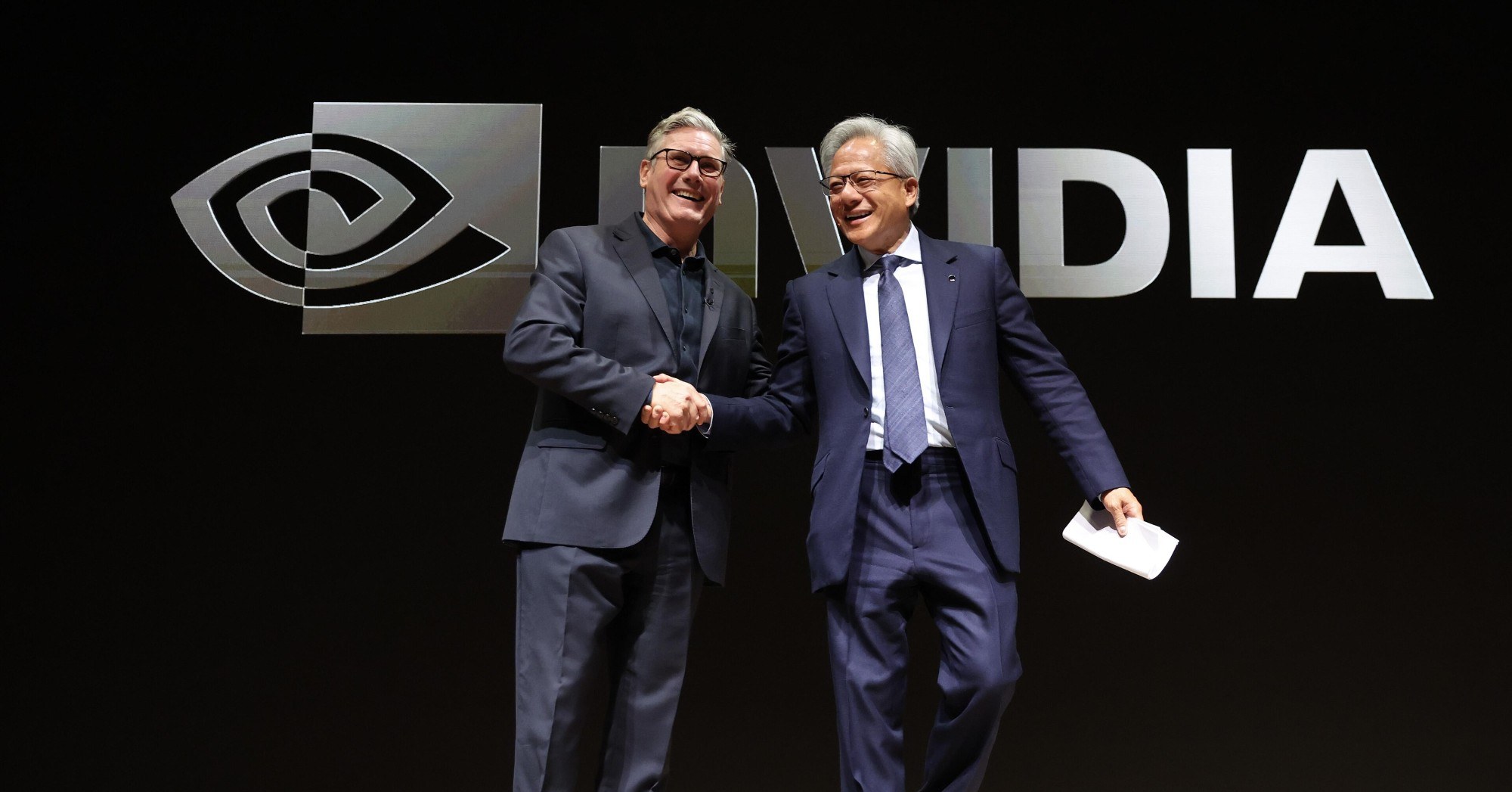
Top image: Nvidia co-founder and CEO Jensen Huang, right, with British Prime Minister Keir Starmer at an Nvidia event in 2025. Photo: Number 10 on Flickr / OGL 3 via Wikimedia Commons
Nvidia’s board of directors met Wednesday night to discuss whether Jensen Huang should remain chief executive of the company he co-founded in 1993, CNBC confirmed. As of Thursday morning, no decision had been announced, according to Reuters’ reporting on the meeting.
The meeting came hours after The New York Times reported that Huang had a relationship with a second woman, Kimberly Powell, Nvidia’s vice president of health care, who reports directly to him. The Times cited five people who had worked at the company. The first relationship, which Huang acknowledged and apologized for in a message to employees first reported by Axios, was with Megaspeed executive Alice Huang, whom three House chairmen have described, citing public reports, as a Chinese intelligence asset. China’s government has called the allegations “baseless and purely slanderous smears against China,” ABC News reported.
Asked by the Times about Powell, Huang said, “I don’t think you should be talking to me directly,” before hanging up, Politico reported. Nvidia declined to provide a statement to the Times, and Powell did not respond to requests for comment.
Nvidia shares were down 8.1% in premarket trading as of 7:05 a.m. ET Thursday, according to CNBC.
What the board can do
Nvidia’s bylaws allow a majority of its 11 directors to remove the CEO with or without cause, and every director other than Huang is considered independent, The Next Web reported. Huang, 63, owns about 3.6% of the company, and Nvidia has no public succession plan. Bloomberg reported that the board is working with an outside firm to identify potential replacements, and some analysts have named Chief Financial Officer Colette Kress as a possible interim chief.
The board has so far framed the matter as a conduct question. When it opened an independent review on Sunday, it said it had “no reason to believe that either national security or Nvidia secrets were compromised,” and that Huang “fully supports the review,” ABC News reported.
On Wall Street, analysts are weighing what Nvidia would be without its founder. Bernstein on Thursday cut its price target on the stock in half, from $400 to $200. “Jensen is Nvidia, right? He is the visionary,” Bernstein senior analyst Stacy Rasgon told CNBC, adding that an alleged relationship with a direct report makes it “much tougher for the board to leave him in position.”
The House deadline passed
Wednesday was also the deadline three Republican House chairmen set for Huang to say whether he would attend a closed-door briefing on Nov. 18. House China Committee Chairman John Moolenaar said on Fox Business that Huang had until 5 p.m. ET to agree or offer another date. “If he doesn’t agree to that or submit an additional date, I believe there will likely be subpoenas for him to appear,” he said, according to Reuters.
Moolenaar and House Foreign Affairs Chairman Brian Mast told reporters Wednesday afternoon that they had not heard from Huang. Asked whether the committees were considering a subpoena, Mast said “yes,” CNBC reported. “All three committees have subpoena power,” Moolenaar said. “We are going to continue to pursue this.”
Reuters reported that the chairmen are unlikely to accept Nvidia’s general counsel in Huang’s place, citing a person familiar with the discussions. Any subpoena could have a short life: Republicans lose their committee gavels in January, when Democrats take the House majority, and a new subpoena would likely be needed then, ABC News noted. No public reply from Huang or Nvidia to the chairmen’s letter had surfaced by Thursday morning. Our Wednesday report details the letter and the shareholder suit filed in San Jose.
Calls to step down, and a defense from the White House
A small number of lawmakers have called for Huang to resign. “As a matter of his own conscience, he should resign,” Sen. Kevin Cramer, R-N.D., told CNBC, arguing that Huang is vulnerable to blackmail. Rep. Suhas Subramanyam, D-Va., and Rep. Don Bacon, R-Neb., also said he should step down.
President Donald Trump, who has relied on Huang as an adviser on artificial intelligence, has defended him. “I think he’s an honorable guy,” Trump told reporters Sunday, according to The Guardian. “I haven’t heard he’s done anything wrong.” Trump later said Huang told him by phone that he had no idea the woman was allegedly a spy.
The episode is also feeding a separate fight over chip exports. Sens. Elizabeth Warren, D-Mass., and Jim Banks, R-Ind., urged colleagues to add their AI Overwatch Act to the annual defense bill. Rep. Jay Obernolte, R-Calif., co-chair of the House AI task force, said he hopes the scandal does not become a distraction in those talks, according to CNBC.
A Bay Area footnote
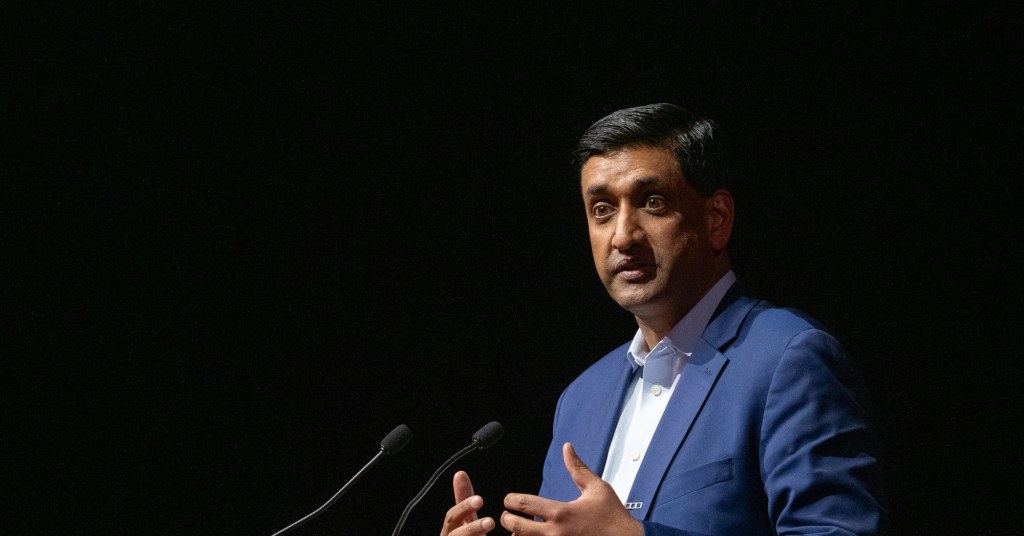
Rep. Ro Khanna, who represents Silicon Valley’s 17th District and serves on the House China committee, has called for a classified briefing for Congress on the national security questions, The Daily Wire reported. Separately, trade trackers flagged two sales of Nvidia shares in his spouse’s account, on Sept. 4 and Oct. 7, each between $1,000 and $15,000, Stocktwits reported. Khanna, a longtime advocate of banning lawmakers from trading individual stocks, has said his household’s investments are held in a trust set up by his in-laws and managed by an independent third-party trustee.
What comes next
Nvidia reports third-quarter results on Nov. 17, and the requested House briefing is Nov. 18. The board could act before either date. For Santa Clara, where Nvidia anchors the South Bay’s AI economy, the board’s choice will be about more than one executive.



Leave a Reply